
Three days in San Francisco is enough for Alcatraz, a cable car ride, a walk on the Golden Gate Bridge, Golden Gate Park and a few of the city's best neighborhoods. The trick is to group sights by area. San Francisco is small on a map, but its hills, wind and changing weather make long zigzags across town tiring.
This San Francisco itinerary for 3 days is built for a first visit at an active but realistic pace. It needs no car, puts the few fixed-time bookings first and gives you swaps for rain, fog and tired legs. If you want the same plan shaped around your own hotel, dates and interests, you can build a custom San Francisco itinerary in Travo.
San Francisco itinerary at a glance
- Day 1: Ferry Building, the Embarcadero, Alcatraz, Chinatown and North Beach.
- Day 2: Cable car to the bay, Fort Mason and Crissy Field, the Golden Gate Bridge and Lands End.
- Day 3: Golden Gate Park, Haight-Ashbury and the Mission District.
Each day stays in one part of the city: the northeast waterfront, the northern shoreline, then the west side and the Mission. For the general rules behind this kind of plan, see our guide to planning a short city break.
Before you go: book Alcatraz first
Alcatraz is the one booking that shapes the whole trip. The island is part of a national park, but the only way to get there is a ferry run by Alcatraz City Cruises, the only ferry operator authorized by the National Park Service. Boats leave from Alcatraz Landing at Pier 33. The NPS strongly recommends booking ahead, and tickets go on sale up to 90 days in advance. Check current prices and tour types (day, night and behind the scenes) on the NPS Alcatraz fees page.
Once you have an Alcatraz time, build Day 1 around it. If the only slot left is on Day 2 or Day 3, swap the days; the plan works in any order. The NPS says to plan on at least a few hours for the visit, so do not stack another fixed-time ticket on the same morning.
Other things worth checking close to your trip: museum closing days in Golden Gate Park, Golden Gate Bridge sidewalk hours and any sidewalk closures for events or construction.
Day 1: Ferry Building, Alcatraz, Chinatown and North Beach
Morning: Ferry Building and the Embarcadero
Start at the Ferry Building at the foot of Market Street. Inside are food stalls, coffee and bakeries, which make it an easy first breakfast. On Tuesdays and Thursdays (10 a.m. to 2 p.m.) and Saturdays (8 a.m. to 2 p.m.), the Ferry Plaza Farmers Market sets up outside, all year round. Saturday is the big one, so come early if you want to browse before the crowds.
From there, walk north along the Embarcadero toward Pier 33. The flat waterfront path has views of the Bay Bridge and the bay, and the walk is an easy way to get your bearings. Give yourself a buffer before your Alcatraz boarding time.
Midday: Alcatraz
Take your booked ferry to the island. An audio tour comes with every ticket, and ranger tours are free. Bring a layer: the boat ride and the island are often windy and cooler than downtown. Eat before you go or bring a snack, and plan for the visit to take most of the middle of the day.
Afternoon and evening: Chinatown and North Beach
Back at Pier 33, walk inland to North Beach, the old Italian neighborhood around Washington Square. It is a good place for a late lunch or coffee. If you still have energy, climb Telegraph Hill toward Coit Tower for views over the bay, or skip the hill and save your legs for tomorrow.
Continue into Chinatown. Walk Grant Avenue for the classic shop fronts, then turn onto Stockton Street, where locals do their daily shopping. Finish with dinner in Chinatown or back in North Beach. Both are close together, so there is no need for a taxi between them.
Day 2: Cable car, the bay and the Golden Gate Bridge
Morning: ride a cable car to the bay
San Francisco has three cable car lines. The Powell-Hyde and Powell-Mason lines both start at Powell and Market and run to the Fisherman's Wharf area; the California line runs from Market Street to Van Ness Avenue. For the classic hill views, ride the Powell-Hyde line north.
The lines at the Powell and Market turnaround can be long, so go early. SFMTA says that from 8 a.m. to 8 p.m. you must pay before boarding at Powell and Market, Bay and Taylor, and Hyde and Beach. The easy way is to pay ahead in the MuniMobile app or with Clipper. A single cable car ride costs $9 (~€8), and a 3-Day Visitor Passport for unlimited Muni rides, cable cars included, costs $35 (~€30). Check the current prices on the SFMTA fares page before you buy. Note that bikes are not allowed on cable cars and cable cars have no accessible boarding.
Midday: Fisherman's Wharf to Crissy Field
From the end of the Powell-Hyde line, walk west through Aquatic Park and Fort Mason toward the Marina and Crissy Field. Fisherman's Wharf is busy and touristy, so treat it as a walk-through rather than a destination. The shoreline path toward Crissy Field gets calmer as you go, and the bridge slowly fills the view ahead. Pick up lunch along the way or at the end of the walk.
Afternoon: walk the Golden Gate Bridge
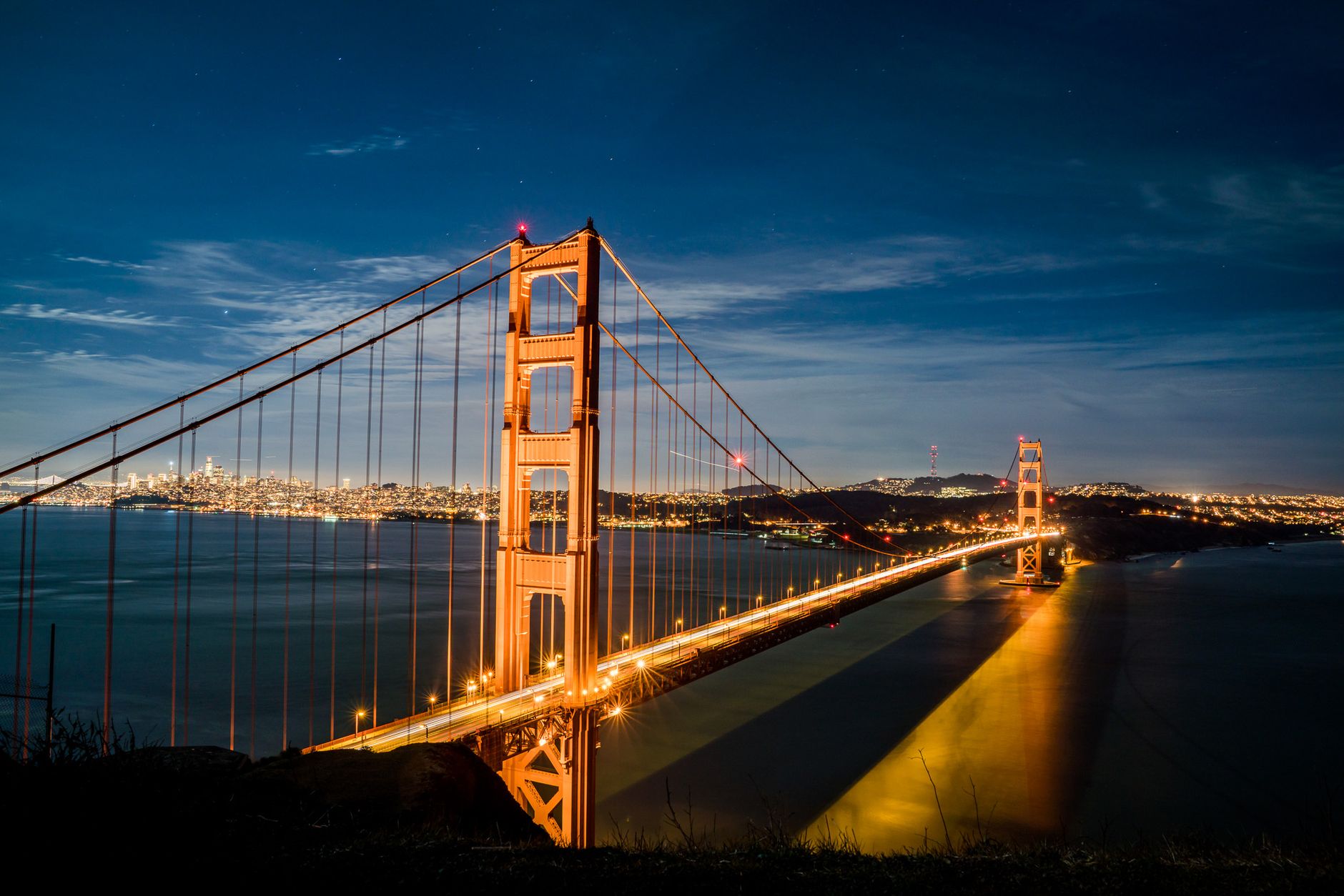
At the south end of the bridge, the Welcome Center is open daily from 9 a.m. to 6 p.m. and has exhibits about the bridge. Pedestrians may only use the east sidewalk, the side facing San Francisco. According to the Golden Gate Bridge district, it is open from 5 a.m. to 6:30 p.m. during Pacific Standard Time (winter) and from 5 a.m. to 9 p.m. during Pacific Daylight Time (summer). On some weeknights it closes early for construction, so check the page on the day.
You do not have to cross the whole bridge. Walking out to the first tower and back gives you the views without committing to the full crossing. Fog often rolls in fast here, so if the bridge is hidden, go on to Lands End and come back later or on Day 3.
Late afternoon: Lands End
Take a Muni bus or a rideshare to Lands End, in the northwest corner of the city. The National Park Service describes it as wild and windy, with trails along the cliffs. Walk part of the Coastal Trail, look down on the ruins of the Sutro Baths and stop at the Lands End Lookout visitor center. On a clear evening this is one of the best sunset spots in the city.
If your legs are done after the bridge, skip Lands End and spend the evening in the Marina or back near your hotel instead.
Day 3: Golden Gate Park, Haight-Ashbury and the Mission
Morning: Golden Gate Park
Golden Gate Park is big, so choose one main stop. The California Academy of Sciences has an aquarium, a planetarium and a four-story rainforest under one roof. It opens at 9:30 a.m. Monday to Saturday and at 11 a.m. on Sunday, and it recommends buying tickets ahead, especially for weekends and holidays. Planetarium shows need a separate reservation once you are inside. Across the Music Concourse, the de Young museum is the art option; check its closing day on the museum's website before you plan around it.
After your museum, walk through the Japanese Tea Garden or simply wander the park's paths and lawns. In good weather this is a slow, easy morning; in rain, the museum carries the whole morning.
Lunch: Haight-Ashbury
Walk east out of the park to Haight Street. The Haight-Ashbury neighborhood is known for its 1960s counterculture history, vintage shops and colorful Victorian houses. It is a good place for lunch and a short wander, not a full afternoon.
Afternoon and evening: the Mission District
Take Muni to the Mission District. Start at Mission Dolores on 16th Street. The mission was founded in 1776, and its official site calls the Old Mission the oldest building in San Francisco. Check the current visiting hours on missiondolores.org.
Next door, Dolores Park has one of the best views of the downtown skyline and is where locals spend sunny afternoons. Then walk Valencia Street and the side streets for murals, bookshops and cafes. End your trip with dinner in the Mission, which is one of the best areas in the city for casual food.
If you only have half a day on Day 1 or Day 3
For a late arrival, keep the Ferry Building, the Embarcadero walk and dinner in North Beach, and move Alcatraz to another day. For an early departure, keep Golden Gate Park or the Mission, not both. San Francisco International Airport (SFO) has a BART station in the International Terminal, and the free AirTrain links it to every terminal. BART says the ride to downtown San Francisco takes about 30 minutes, and you can pay by tapping a contactless bank card or phone at the gates.
The same idea, one anchor per day and an optional block, runs through our 3-day Boston itinerary and our 3-day Seattle itinerary.
Where to stay and how to get around
Union Square and the area around Powell Street are the most practical base for a first visit: close to BART, Muni and the cable car turnaround. The Embarcadero and Financial District are good for the waterfront and the Ferry Building. North Beach is lively and walkable but hilly with luggage. The Mission has great food and BART access but is farther from the bay sights.
You do not need a car for this route. Walk where you can, use Muni buses and trains for longer hops, and use BART for the airport. BART suggests putting Clipper on your phone if you plan to ride cable cars, ferries or buses. San Francisco is hilly, so wear comfortable shoes and plan rest stops on the steep days.
Weather and seasonal tips
San Francisco weather changes quickly, and it can be cool and foggy even when the rest of California is warm. Pack layers for every day of this plan, including a windproof jacket for Alcatraz and the bridge.
- Spring and fall: Often good walking weather, but still bring a warm layer for the evenings.
- Summer: Book Alcatraz early, expect busy cable car lines, and expect fog near the ocean and the bridge.
- Winter: Days are shorter and the bridge sidewalk closes earlier, so do the bridge walk before mid-afternoon. Use the museums as rainy-day backups.
Budget tips
Many of the best parts of this plan are free: the Embarcadero, Chinatown, North Beach, the Golden Gate Bridge walk, Lands End, Golden Gate Park and Dolores Park. Your main costs will be Alcatraz, one museum, cable cars and food. If you plan to ride Muni and cable cars a lot over three days, compare the 3-Day Visitor Passport with paying per ride.
Is 3 days in San Francisco enough?
Yes, for a first visit focused on the city itself. Three days covers Alcatraz, the bridge, a cable car, Golden Gate Park and a few neighborhoods at a steady pace. It is not enough to add Muir Woods, wine country or a drive down the coast as well. If you want those, add a fourth day, or start a road trip from here with our 7-day Pacific Coast Highway itinerary.
Plan your San Francisco trip in Travo
Travo is an AI trip planner for iOS and Android. Tell it your dates, where you are staying and what you want to see, and it builds a day-by-day itinerary you can change. Add your Alcatraz time first, then let it fill in the rest of the day around it. Before you go, check opening hours and closures on the official sites linked above.
The free plan includes 2 trips and 2 AI itineraries. Premium costs $2.99 a month or $24.99 a year in the US (€3.09 or €25.99 in the eurozone) and adds unlimited trips and AI itineraries.
Get Travo: Download on the App Store or get it on Google Play.
Customize this 3-day San Francisco itinerary