
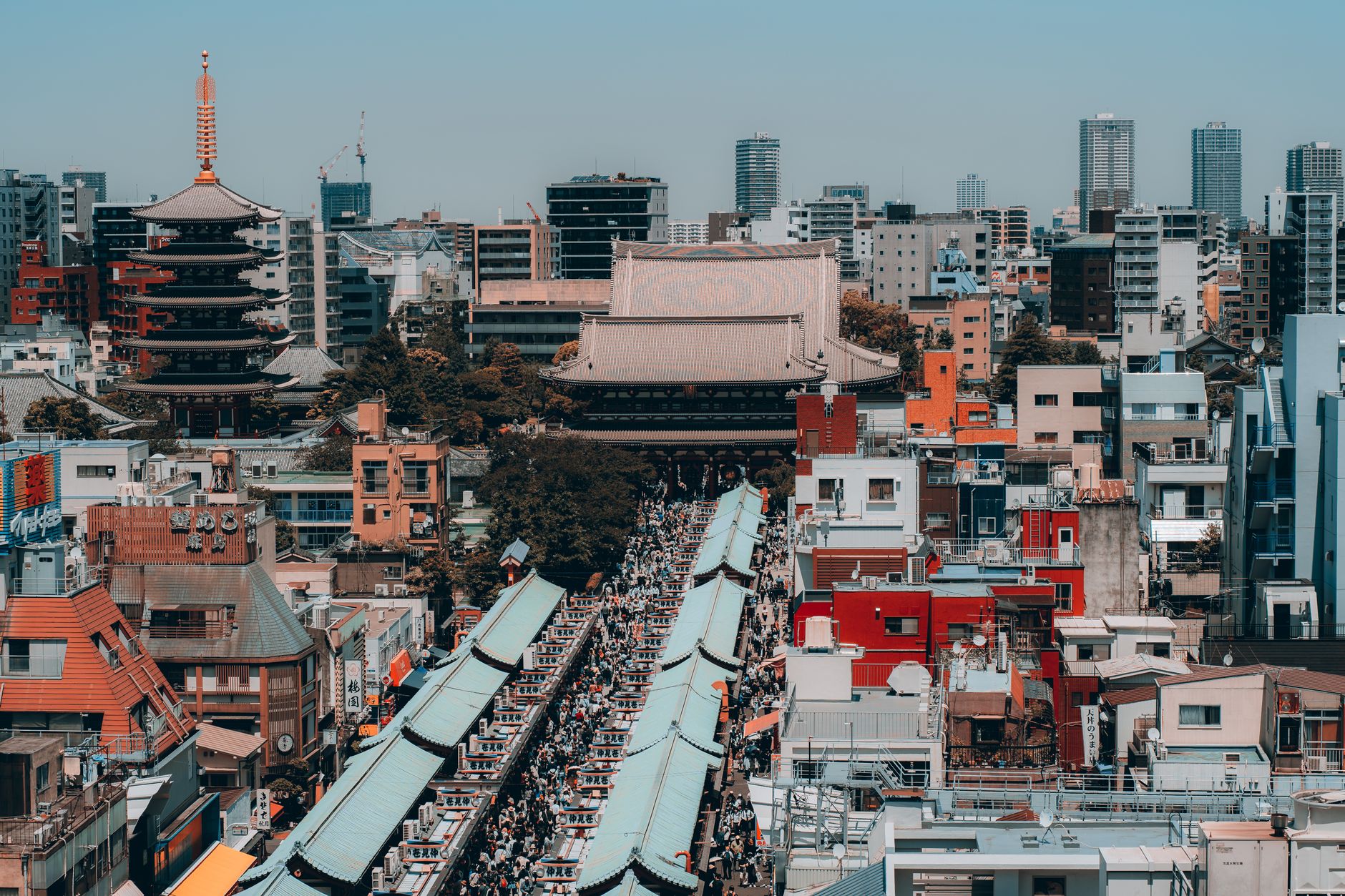
A Japan itinerary for 3 weeks gives you something a rushed first visit cannot: time to experience the headline cities and see how different Japan feels beyond them. This 21-day route connects Tokyo, Kyoto, Osaka, Hiroshima, Kanazawa and the Japanese Alps in a logical loop. It leaves room for temples and neon streets, but also gardens, mountain towns, local food and an overnight stay where slowing down is the point.
Strong three-week routes avoid changing hotels nightly and balance Tokyo and Kansai with quieter places. To adapt this loop around your flights, interests and pace, use Travo to generate a personalized version.
Japan 21-Day Itinerary at a Glance
- Days 1–4: Tokyo — recover from the flight, explore contrasting neighborhoods and take one flexible day.
- Days 5–6: Kanazawa — gardens, samurai history, markets and contemporary art.
- Days 7–8: Takayama — old-town streets, mountain food and an optional Shirakawa-go stop.
- Days 9–13: Kyoto — temples, gardens, traditional districts and a Nara day trip.
- Days 14–15: Osaka — street food, nightlife and an unhurried city day.
- Days 16–17: Hiroshima and Miyajima — modern history and an island shrine landscape.
- Days 18–21: Hakone and Tokyo — onsen time, possible Mount Fuji views and a calm finish.
This route works especially well with an open-jaw flight into and out of Tokyo because it forms a loop. If you fly home from Osaka, reverse the final section: visit Hakone after Tokyo, continue west, and finish in Kansai.
Days 1–4: Tokyo Without Trying to See Everything
Day 1: Arrive and reset
Choose a hotel near a useful rail or metro station and keep arrival day deliberately light. Walk the surrounding neighborhood, buy or load an IC card and sleep. Scheduling Shibuya, teamLab or a cross-city restaurant reservation after a long flight is a reliable way to begin exhausted.
Day 2: Old Tokyo and Ueno
Start around Asakusa before the busiest hours, then continue toward Kappabashi or Ueno. Ueno Park, the Tokyo National Museum and Ameyoko can fill the afternoon without repeated cross-city journeys. Grouping stops geographically matters more than collecting the maximum number of attractions.
Day 3: Meiji, Harajuku and Shibuya
Begin at Meiji Jingu, walk through Harajuku according to your interests, then continue south to Shibuya. Reserve any timed observation deck in advance. Stay for dinner so you experience the district after dark rather than commuting somewhere else for a single meal.
Day 4: Choose your Tokyo
Use this as a personalization day. Pick contemporary art and architecture, Akihabara and gaming, Daikanyama and cafés, or a day trip to Kamakura. Do not add all four. Travelers building their first route can also use our complete guide to planning a Japan trip for seasonal and booking decisions.
Days 5–6: Kanazawa's Gardens and Craft Culture
Take the train to Kanazawa and leave your bags before exploring Omicho Market and the preserved streets of Higashi Chaya. On day six, visit Kenrokuen near opening time, then choose Kanazawa Castle, the 21st Century Museum of Contemporary Art or the Nagamachi samurai district. Two nights are enough to appreciate the city without treating it as a station stop.
Kanazawa changes the pace after Tokyo and breaks the journey toward the Alps. Check official rail schedules for your dates and confirm the final service locally.
Days 7–8: Takayama and the Japanese Alps
Travel from Kanazawa toward Takayama, optionally stopping at Shirakawa-go if bus reservations and luggage arrangements make the connection comfortable. Do not force the village into the route if it creates a stressful transfer. Takayama itself rewards an evening and a full morning: explore Sanmachi's preserved streets, try Hida beef, and visit a morning market.
Use your second day for the Hida Folk Village, a sake tasting or a slower walk. A ryokan can add a traditional room, bath and set meal; arrange dietary needs before booking.
Days 9–13: Kyoto With Time for Early Starts
Day 9: Settle into Kyoto
After the transfer, explore your immediate district. If you stay downtown, walk through Nishiki Market and along the Kamo River. Save a major temple circuit for a rested morning.
Day 10: Eastern Kyoto
Start at Kiyomizu-dera, then walk through Sannenzaka and Ninenzaka toward Yasaka Shrine and Gion. This is a naturally connected walking route. Be respectful in residential lanes and follow local photography signs.
Day 11: Arashiyama beyond the bamboo path
Arrive early, but do not make the bamboo grove your only goal. Tenryu-ji, riverside paths and quieter nearby temples create a fuller day. Return before the evening crush or stay for dinner west of the center.
Day 12: Fushimi Inari and southern Kyoto
Walk beyond the crowded lower gates at Fushimi Inari, turning back whenever your energy requires. Combine it with one nearby attraction rather than crossing Kyoto repeatedly. Three weeks gives you permission to leave space in the afternoon.
Day 13: Nara day trip
Visit Todai-ji and Nara Park, then add Kasuga Taisha or a quieter garden. Nara is an easy day trip, so keep your Kyoto hotel and travel with a small day bag. For a shorter alternative route, compare this plan with our 14-day Japan itinerary.
Days 14–15: Osaka for Food and Nightlife
Kyoto to Osaka is a short transfer, but the cities feel very different. Spend the first afternoon around Osaka Castle or the Museum of Housing and Living, then explore Dotonbori after dark. Try takoyaki, okonomiyaki and kushikatsu in portions that allow you to sample rather than over-order.
On day 15, choose one area: Kuromon Market and Namba, retro Shinsekai, the aquarium and bay, or a prebooked Universal Studios day.
Days 16–17: Hiroshima and Miyajima
Take the morning train to Hiroshima. Visit Peace Memorial Park and the museum with enough time and emotional space; do not sandwich them between several unrelated attractions. Later, walk along the river or try Hiroshima-style okonomiyaki.
Use day 17 for Miyajima. Check tide information if views around Itsukushima Shrine matter to you, but enjoy the island at any tide. Walk beyond the waterfront, take the ropeway if conditions permit, or hike part of Mount Misen. Return to Hiroshima for the night unless an island stay fits your budget.
Days 18–21: Hakone, Then a Flexible Tokyo Finish
Day 18 is the longest transit day, so send large luggage ahead and carry one overnight bag if practical. Stay in Hakone for an onsen experience and treat Mount Fuji as a weather-dependent bonus, never a guaranteed sight. The open-air museum and lake area give you worthwhile alternatives when clouds hide the mountain.
Return to Tokyo on day 19. Keep days 20 and 21 flexible for places you missed, shopping, a final meal and airport logistics. Travo is particularly useful here: it can rearrange priorities while preserving reservations and reducing unnecessary backtracking.
Transport: Do Not Assume the 21-Day JR Pass Is Cheapest
A nationwide Japan Rail Pass can be convenient, but it is not automatically the best value. Compare your actual long-distance journeys with current individual fares and regional passes before buying. A route with long stays in Tokyo and Kyoto may favor separate tickets, while concentrated intercity travel may make a pass worthwhile. Note that the fastest Nozomi and Mizuho services require special handling or supplemental tickets under current pass rules, so verify terms on the official JR Pass site.
Use an IC card for most urban transit, and check oversized-baggage rules before boarding the Shinkansen. Luggage forwarding can make the Kanazawa–Takayama and Hiroshima–Hakone sections much easier. Keep medication, valuables and one change of clothes with you.
What to Book Before You Leave
- International flights and your first Tokyo hotel.
- Limited-capacity experiences and major theme-park days.
- Ryokan rooms, especially when meals or private baths matter.
- Shirakawa-go buses if that stop is essential.
- Key trains during peak domestic travel periods.
Restaurants do not all need reservations. Mix a few planned meals with neighborhood discoveries. A structured multi-city trip planning method will help you track the route without turning the vacation into a spreadsheet project.
How to Personalize This Three-Week Japan Route
Anime and design fans may add more Tokyo time. Hikers can exchange Osaka for extra Alpine days. Food-focused travelers may extend Osaka, while history lovers can add Himeji between Kansai and Hiroshima. For a second Japan trip, replace the classic loop with Kyushu, Tohoku or Hokkaido rather than stretching this first-timer itinerary across the whole country.
The best 21-day plan is not the one with the most pins. It is the one that matches your energy, budget and non-negotiables while leaving room for discovery. Build those preferences into Travo, check time-sensitive details against official operators, and you will arrive with a useful plan that can still bend when Japan surprises you.
Related Reading
- Japan Itinerary: 14 Days for First-Time Visitors
- How to Plan a Trip to Japan: The Complete First-Timer's Guide
- Multi-City Trip Planner: How to Build a Smarter Route
- South Korea 10 Day Itinerary: Seoul, Busan and Jeju
- Vietnam Itinerary 10 Days: Hanoi, Hoi An and Ho Chi Minh City
- Japan Itinerary 10 Days: Tokyo, Kyoto and Osaka