
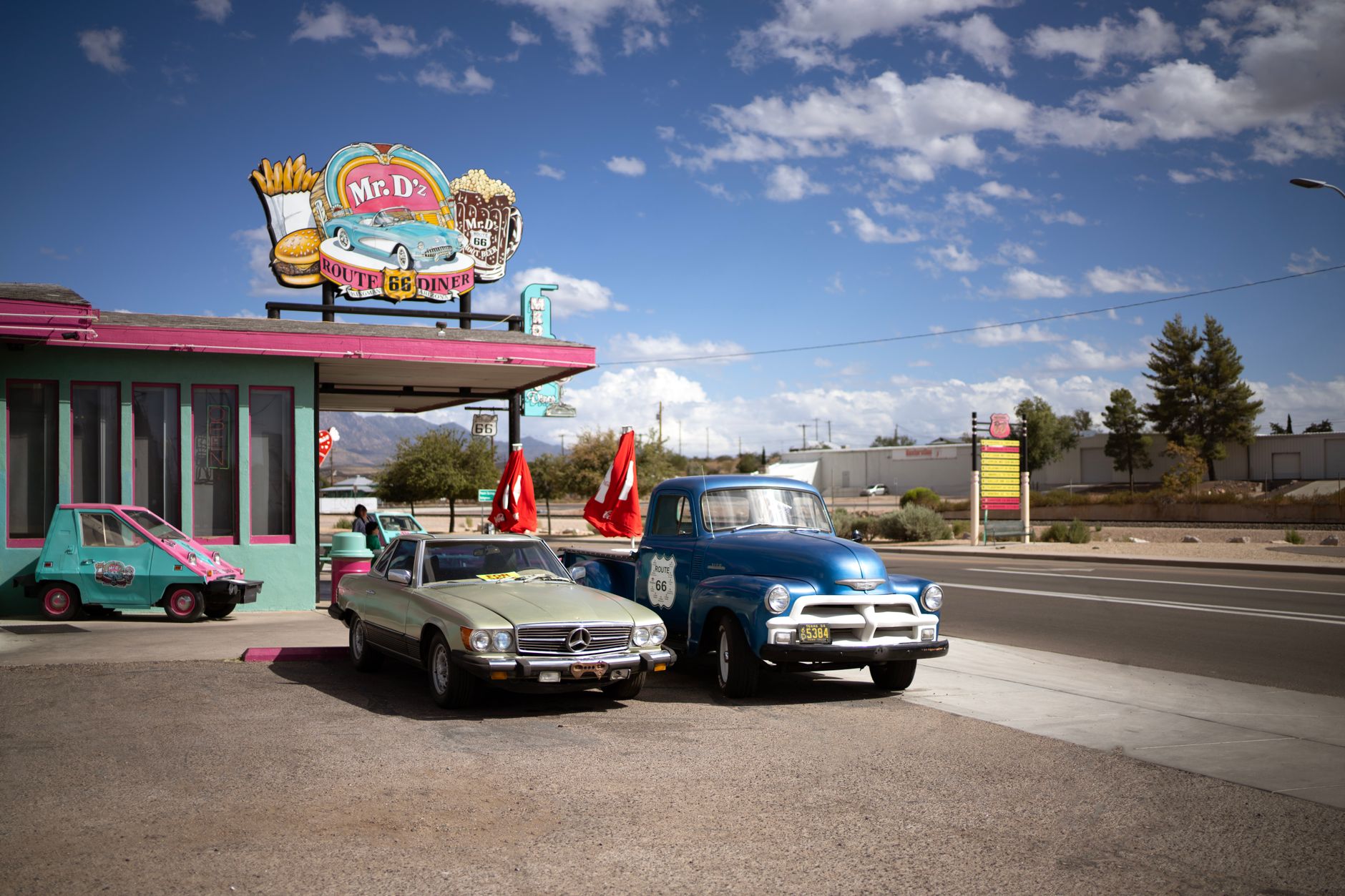
A useful Route 66 road trip planner does more than connect Chicago and Santa Monica. Historic Route 66 is no longer one continuous signed highway, so the real planning job is to combine preserved alignments, small-town main streets and modern interstate connectors without turning every day into a race. This two-week route protects time for the roadside places that make the Mother Road worth driving.
The National Park Service documents more than 250 Route 66 buildings, bridges, road alignments and other sites on the National Register of Historic Places. You cannot visit all of them in one trip. Start with a small set of anchors, keep daily driving flexible and verify current road access before departure. For the planning method behind that approach, read our guide to planning a road trip around realistic limits.
Two-week Route 66 route at a glance
- Day 1: Chicago to Springfield, Illinois
- Day 2: Springfield to St. Louis, Missouri
- Day 3: St. Louis to Springfield, Missouri
- Day 4: Springfield to Tulsa, Oklahoma, via Kansas
- Day 5: Tulsa to Oklahoma City
- Day 6: Oklahoma City to Amarillo, Texas
- Day 7: Amarillo to Santa Fe, New Mexico
- Day 8: Santa Fe and Albuquerque
- Day 9: Albuquerque to Gallup
- Day 10: Gallup to Holbrook, Arizona
- Day 11: Holbrook to Flagstaff via Winslow
- Day 12: Flagstaff to Kingman
- Day 13: Kingman to Barstow, California
- Day 14: Barstow to Santa Monica
This is a route skeleton, not a promise about drive times. Historic alignments, photo stops, museums, meals and detours can turn a short map estimate into most of a day. Build the skeleton in Travo, then adjust overnight bases around the places you care about rather than adding every famous pin.
Days 1–3: Chicago, Illinois and Missouri
Begin in downtown Chicago, take the traditional westbound direction and leave enough time for the first preserved towns rather than treating Illinois as an exit ramp. Use Springfield as a practical first-night base so the trip starts with a manageable rhythm. Sleep in Springfield on Day 1 so the trip starts with a manageable rhythm.
Continue to St. Louis on Day 2. Choose a small number of stops between Springfield and the Mississippi, then give St. Louis a real evening instead of arriving after dark with a full checklist unfinished. On Day 3, cross Missouri toward Springfield. This section rewards selective planning: combine one historic road segment, one town-center stop and one longer attraction rather than stopping at every sign.
Days 4–6: Kansas, Oklahoma and the Texas Panhandle
Route 66 crosses only a short corner of Kansas, but that makes it easy to include without sacrificing the day. Continue into Tulsa, where restored roadside architecture and a larger city base balance the small towns. Day 5 is intentionally short: Tulsa to Oklahoma City leaves room for roadside stops and local museums along the westbound drive, depending on opening days and your interests.
Day 6 moves west through Oklahoma into Amarillo. The landscape opens, stops spread out and fuel planning matters more. Pick a lunch town and a late-afternoon anchor before you leave. Cadillac Ranch is easy to recognize, but Amarillo is also a practical overnight point before New Mexico. If you are comparing navigation, stop discovery and offline tools, use our road trip app guide before downloading a stack of overlapping apps.
Days 7–9: New Mexico at a slower pace
Drive from Amarillo through Tucumcari toward Santa Fe on Day 7. Tucumcari's neon and historic motels make it more than a fuel stop, so budget time to walk rather than photographing everything through the windshield. Santa Fe adds an extra city stop and deserves an evening in this schedule.
Day 8 is intentionally short: explore Santa Fe, then continue to Albuquerque for the night. Albuquerque's Central Avenue gives you a long urban Route 66 experience, while the slower day creates a buffer for laundry, vehicle checks or a delayed start. Day 9 continues to Gallup through open high-desert country. Download maps, confirm fuel range and do not assume cell coverage will solve every navigation problem.
Days 10–12: Arizona's preserved road and desert landscapes
From Gallup, cross into Arizona and stay in Holbrook for the night. Petrified Forest National Park preserves Route 66 history alongside its landscape; check the official park site for current hours, conditions and entrance details. Keep the park visit and the transfer in the same day, but avoid adding a Grand Canyon detour unless you are willing to remove another stop or add a night.
On Day 11, continue west through Winslow and end in Flagstaff. Day 12 runs through Williams and Seligman to Kingman. This is one of the best days for longer preserved sections, so resist the urge to rush. If weather or fatigue changes the plan, use Travo to revise the sequence, then recheck every affected reservation and driving leg.
Days 13–14: Mojave Desert to Santa Monica
Leave Kingman with a full tank and current road information. If you consider the historic alignment through Oatman, verify current road conditions and decide whether it suits your vehicle, schedule and driver confidence. Continue through the Mojave toward Barstow, using verified fuel stops rather than assuming every historic business is open.
The final day crosses the Los Angeles region to Santa Monica. Traffic can dominate the schedule, so keep the afternoon flexible and avoid attaching a time-sensitive flight to the same day. The pier's “End of the Trail” sign is a popular symbolic finish. Treat the ocean arrival as the celebration and leave enough time to enjoy it without a rushed airport transfer.
How to map historic Route 66 today
Do not rely on one navigation app to identify every historic alignment. The National Park Service warns that signage can be limited and GPS or cell reception may fail. Use a Route 66-specific map or guide for historic segments, a current navigation service for active roads, and an offline copy of your day plan.
- Historic layer: use National Park Service maps, state Route 66 associations or a current specialist guide.
- Live navigation: use a current navigation service for turn-by-turn driving and check official road sources for closures.
- Itinerary layer: keep hotels, priority stops and daily pacing together in Travo rather than scattering them across notes.
- Paper backup: carry a printed overview and key addresses for remote sections.
Dedicated Route 66 planners can help discover stops, while a general map handles live driving. No single tool removes the need to verify roads, weather, opening hours and fuel.
Best season and booking priorities
Late spring and early fall often provide a better balance across the route, but Route 66 crosses several climate zones. Winter can bring ice or snow in northern and higher-elevation sections; summer desert heat can make breakdowns dangerous. Check forecasts for each day's corridor, not just the starting city.
Book the first and last nights, scarce historic lodging and any fixed-date attraction first. Keep ordinary city hotels flexible where possible. Reserve a suitable vehicle with enough luggage space, check one-way fees, confirm roadside assistance and inspect tires before long desert stages. Carry water, sun protection and a realistic emergency buffer.
Build your own Route 66 plan
Start with the 14-day sequence above, then remove stops until every day has one main experience and enough slack for the unexpected. Add your interests—neon, architecture, diners, national parks or photography—and protect the stops that justify the journey. A good plan gives you permission to skip something without breaking the trip.
Build and personalize this Route 66 itinerary in Travo. Keep the route in one mobile plan, revise the pace when conditions change and verify live driving details before each stage.