About Ryōzen Kannon
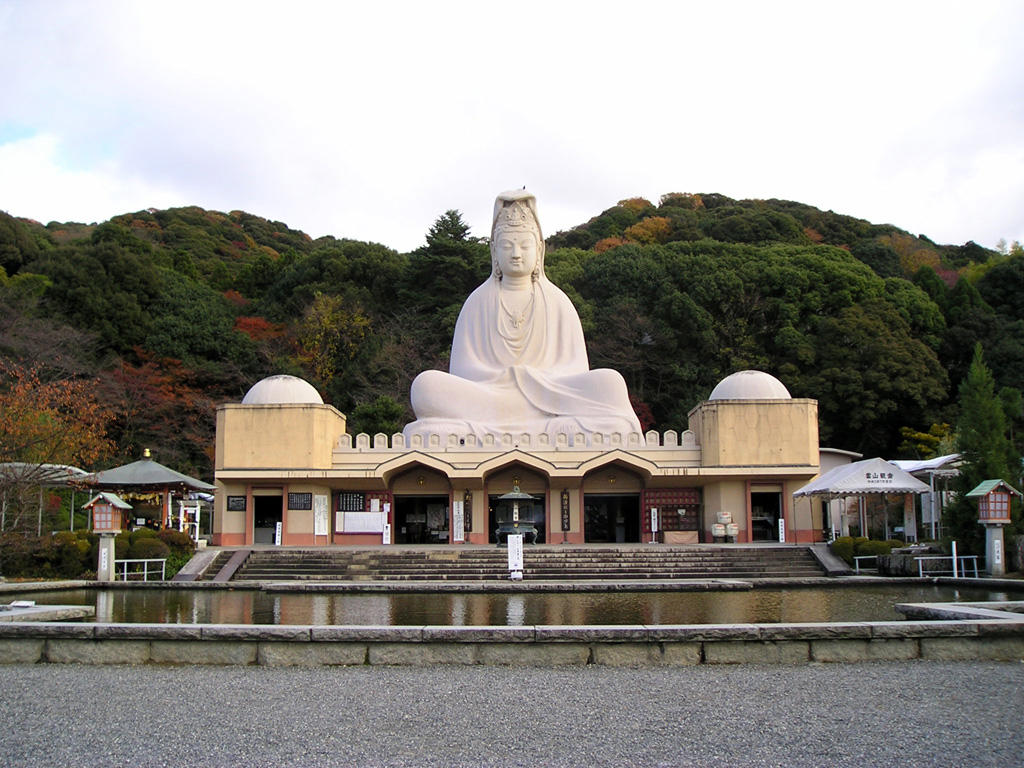
A towering white statue of Kannon, the Bodhisattva of Mercy, rises 24 meters into the sky, her serene face gazing over Kyoto. She holds a lotus flower, a symbol of purity, while her flowing robes cascade gracefully down her form. This immense figure is surrounded by a tranquil garden, with a reflecting pool at her feet that mirrors her peaceful visage. The air is filled with the soft rustle of leaves and the occasional toll of a temple bell, creating an atmosphere of deep reverence.
Built in 1955, the Ryōzen Kannon memorial honors the unknown soldiers who died during World War II. The site serves as a place of reflection and prayer for peace. The statue’s size and presence are a reminder of the immense loss of life, while the surrounding grounds invite visitors to contemplate the cost of war and the value of compassion.
A Sacred Space for Reflection
The Ryōzen Kannon is not just a war memorial but also a spiritual site. At the base of the statue, a small altar holds a flame brought from the Hiroshima Peace Memorial Park, symbolizing the enduring memory of those who perished. Visitors can light incense and offer prayers, connecting with the universal desire for peace. The quiet surroundings amplify the sense of solemnity, making this a place where history and spirituality intertwine.
Plan your perfect trip to Kyoto with Travo! Download now and start exploring.


Details That Speak of Peace
Notice the intricate details of the statue’s design. The folds of Kannon’s robes seem to ripple as if moved by a gentle breeze, and her calm expression radiates compassion. The lotus flower she holds is a powerful Buddhist symbol, representing enlightenment and the ability to rise above suffering. The reflecting pool at her feet doubles the image, creating a visual metaphor for introspection and balance.
Historical Context and Purpose
After World War II, Japan faced the challenge of rebuilding not only its cities but also its spirit. The Ryōzen Kannon was constructed as a gesture of reconciliation and a call for peace. The inclusion of the eternal flame from Hiroshima ties the site to the broader narrative of war and its aftermath, reminding visitors of the shared human cost of conflict.
Artistic and Cultural Significance
The statue’s design reflects traditional Buddhist art while incorporating modern elements to convey its message. Its sheer size ensures it can be seen from various points in Kyoto, making it a landmark of both the city and its post-war history. The surrounding garden, with its carefully arranged stones and plants, follows the principles of Japanese landscape design, emphasizing harmony and natural beauty.
Living Legacy
Today, the Ryōzen Kannon continues to draw visitors from around the world. School groups, tourists, and locals come here to learn, reflect, and pay their respects. The site also hosts ceremonies and events promoting peace, ensuring that its message remains relevant. In a city known for its ancient temples and shrines, this modern monument stands as a poignant reminder of the need for compassion and understanding in our time.
Map loading...
Location
Ishin Street, 605-0826, Kyoto