About Diamond Head
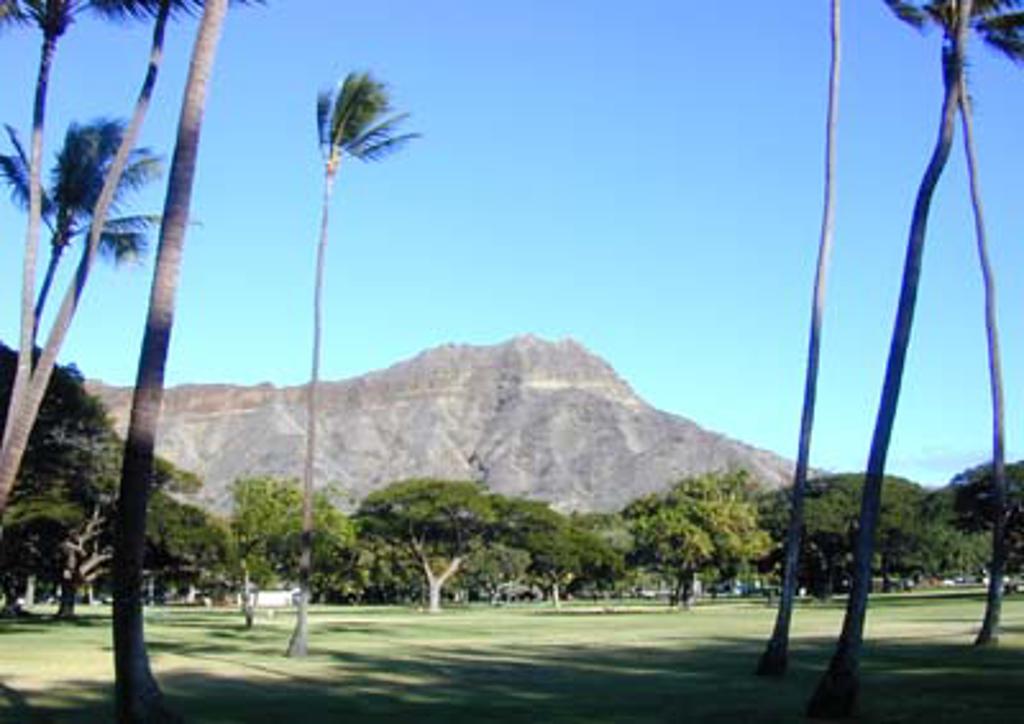
The jagged ridgeline of Diamond Head rises dramatically against the blue Hawaiian sky, its volcanic crater forming a near-perfect semicircle. The rugged terrain, covered in dry grasses and hardy shrubs, contrasts with the lush greenery of Honolulu below. From the summit, sweeping views stretch across Waikiki Beach, the Pacific Ocean, and the city’s skyline, blending natural beauty with urban vibrancy.
Diamond Head, known as Lēʻahi in Hawaiian, is a volcanic tuff cone formed around 300,000 years ago during a single explosive eruption. Its name, "Diamond Head," was given by 19th-century British sailors who mistook the calcite crystals in the rocks for diamonds. Today, it stands as one of Hawaii’s most iconic landmarks, a symbol of the island’s volcanic origins and a testament to the natural forces that shaped Oʻahu.
Geological Marvel
The crater spans approximately 350 acres, its steep walls enclosing a flat, bowl-like interior. The layers of volcanic ash, compacted over millennia, reveal the explosive power of its creation. The trail leading to the summit winds through tunnels and steep switchbacks, offering glimpses of the crater’s unique geology. At the top, the remnants of a 1910s military observation station provide a stark contrast to the natural surroundings, a reminder of the site’s strategic importance during World War II.
Plan your perfect trip to Honolulu with Travo! Download now and start exploring.


Military History
In the early 20th century, Diamond Head became a key part of Oʻahu’s coastal defense system. The summit housed bunkers, artillery, and an observation post, all designed to protect the island from potential attacks. Visitors can still see these structures, including the Fire Control Station, which was used to direct artillery fire. The site’s military history adds a layer of intrigue to its natural beauty, making it a place where history and geology intersect.
Hiking the Trail
The Diamond Head Summit Trail is a 0.8-mile hike that takes visitors from the crater floor to the summit. Along the way, hikers encounter steep staircases, dark tunnels, and breathtaking viewpoints. The final ascent rewards climbers with a panoramic view that stretches from the lush Koʻolau Mountains to the vast expanse of the Pacific Ocean. The trail is a favorite for both locals and tourists, offering a physical challenge and a visual feast.
Flora and Fauna
Despite its arid environment, Diamond Head is home to a variety of plant and animal species. Native Hawaiian plants like the ʻilima and naupaka thrive in the dry, rocky soil, while birds such as the zebra dove and common myna can often be seen flitting among the vegetation. The area’s unique ecosystem is a reminder of the resilience of life in even the harshest conditions.
Cultural Significance
To Native Hawaiians, Lēʻahi holds spiritual significance. The name is said to refer to the shape of the ridgeline, which resembles the brow of a tuna fish. Ancient Hawaiians used the summit as a site for religious ceremonies, and the crater’s natural amphitheater was likely used for gatherings and rituals. Today, the site continues to be a place of reflection and inspiration for many.
Modern-Day Importance
As a state monument, Diamond Head attracts over a million visitors annually, making it one of Hawaii’s most popular tourist destinations. It serves as a symbol of the islands’ natural beauty and cultural heritage, drawing people from around the world to experience its breathtaking views and rich history. The site also plays a role in conservation, with efforts to preserve its unique ecosystem and historical structures for future generations.