About Quedlinburger Roland
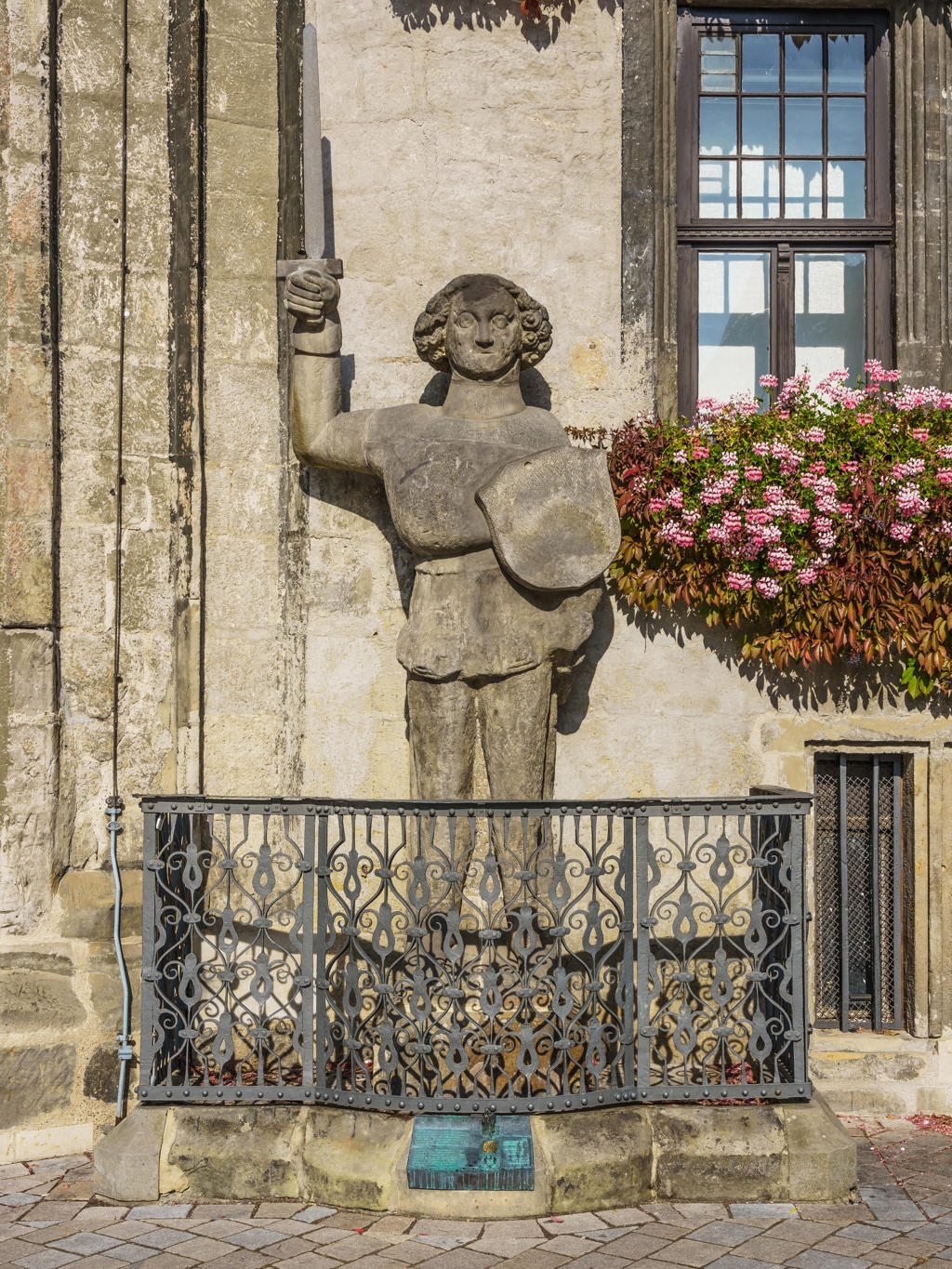
The Quedlinburg Roland stands as a proud sentinel in the heart of Quedlinburg, a testament to the town's medieval heritage and its enduring spirit of independence. This stone figure, with its stern expression and sword held firmly in hand, represents the medieval tradition of Roland statues, which were erected as symbols of market rights and municipal freedom. The Quedlinburg Roland, though smaller than some of its counterparts, carries the same weight of historical significance, embodying the town's autonomy and its role as a center of commerce and governance during the Middle Ages.
Dating back to the 15th century, the Roland statue in Quedlinburg is a reminder of the town's prosperous past. Quedlinburg was once a significant trading hub, and the presence of a Roland statue signified its status as a free city with the right to hold markets. The statue's location, near the town hall, underscores its connection to civic pride and local governance. Over the centuries, the Roland has witnessed the ebb and flow of Quedlinburg's fortunes, from its medieval heyday to its recognition as a UNESCO World Heritage Site.
Marks of Time: The Roland's Historical Significance
The Roland statues, found in various towns across Germany, are rooted in the legend of Roland, a knight of Charlemagne. These statues became symbols of civic liberty and justice, representing the town's rights and privileges. In Quedlinburg, the Roland stands as a guardian of these ideals, a reminder of the town's historical importance and its enduring commitment to self-governance. The statue's presence in the town square is a testament to the medieval tradition of asserting municipal independence through such monuments.
Plan your perfect trip to Quedlinburg with Travo! Download now and start exploring.


Stories in Stone: The Roland's Features
The Quedlinburg Roland is crafted from sandstone, its weathered surface bearing the marks of time. The figure's armor and sword are rendered with a simplicity that speaks to the artistic style of the period, focusing on the symbolic rather than the ornate. The statue's expression, stern and resolute, reflects the seriousness with which the town regarded its rights and freedoms. The Roland's sword, a symbol of justice, is held upright, signifying the town's readiness to defend its autonomy.
Details That Speak: Symbolism and Meaning
Every aspect of the Quedlinburg Roland carries symbolic weight. The sword, a common feature of Roland statues, represents the enforcement of law and order, while the figure's posture conveys strength and vigilance. The statue's location, prominently placed in the town square, reinforces its role as a symbol of civic pride and authority. The Roland's enduring presence in Quedlinburg is a testament to the town's historical resilience and its ongoing celebration of its medieval heritage.
Living History: Quedlinburg's Connection to the Past
Today, the Quedlinburg Roland is more than just a historical artifact; it is a living symbol of the town's rich history and cultural identity. As visitors and locals pass by, the statue serves as a reminder of Quedlinburg's medieval roots and its journey through time. The Roland's presence in the town square invites reflection on the values of independence and justice that have shaped Quedlinburg's past and continue to influence its present. As part of the town's UNESCO World Heritage designation, the Roland contributes to Quedlinburg's status as a place where history is not only preserved but actively celebrated.
Map loading...
Location
Wappen, 06484, Quedlinburg