About Cerro Santa Lucía
Rising 69 meters above the bustling streets of Santiago, Cerro Santa Lucía is a lush urban oasis crowned with historic architecture and vibrant gardens. The hill is a tapestry of winding pathways, ornate fountains, and terraces that offer panoramic views of the city and the Andes Mountains beyond. At its summit, the Torre Mirador provides a breathtaking vantage point, where visitors can take in the sprawling cityscape framed by the distant peaks.
This hill is not just a natural landmark but a site steeped in history. Originally known as Huelén by the indigenous Mapuche people, it was renamed Santa Lucía by Spanish conquistador Pedro de Valdivia in 1541, the same year he founded Santiago. Over the centuries, the hill transformed from a rugged, rocky outcrop into a symbol of the city’s evolution, thanks to a major urban renewal project in the 19th century led by mayor Benjamín Vicuña Mackenna.
Historical Significance
Cerro Santa Lucía holds a special place in Santiago’s history. It was here that Pedro de Valdivia established a strategic lookout point to defend the newly founded city. The hill later became a site of religious significance, with a small chapel dedicated to Santa Lucía built at its summit. In the late 1800s, Vicuña Mackenna spearheaded a transformation of the hill, turning it into a public park adorned with European-style architecture, fountains, and gardens. This project symbolized Santiago’s aspirations to modernize and align itself with European cities of the time.
Plan your perfect trip to Santiago with Travo! Download now and start exploring.


Architectural Marvels
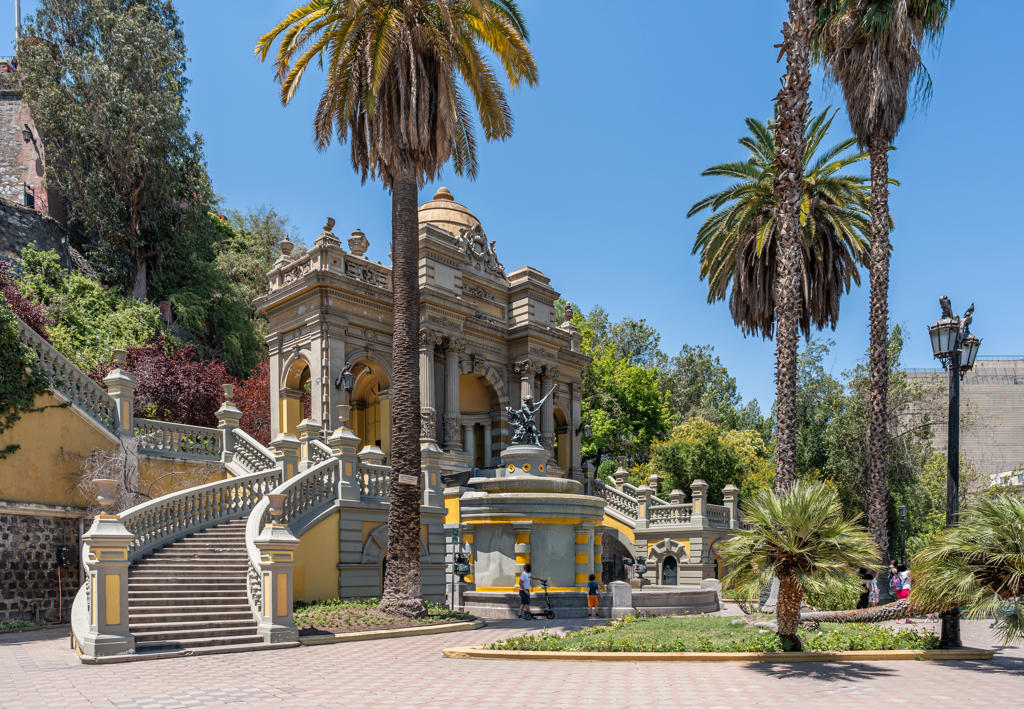
The hill is a showcase of eclectic architecture. The grand Neptune Terrace, with its cascading fountain and ornate statues, is a centerpiece of the park. Designed in a neoclassical style, it features a golden statue of Neptune, the Roman god of the sea, surrounded by intricate carvings and water features. The Castillo Hidalgo, a fortress built in 1820, adds a medieval touch to the hill. Today, it serves as a venue for cultural events and offers a glimpse into the city’s colonial past.
Natural Beauty
Cerro Santa Lucía is a haven of greenery in the heart of Santiago. Its terraced gardens are filled with native and exotic plants, creating a serene environment for visitors. The pathways are lined with benches and shaded by trees, making it a popular spot for locals and tourists alike to relax and escape the city’s hustle and bustle. The hill’s natural beauty is complemented by its carefully designed landscaping, which includes flowerbeds, stone staircases, and hidden alcoves.
Panoramic Views
From the top of Cerro Santa Lucía, the view is nothing short of spectacular. The city of Santiago stretches out in all directions, with the towering Andes providing a dramatic backdrop. On clear days, the snow-capped peaks seem close enough to touch. The Torre Mirador, a small tower at the summit, offers the best vantage point for capturing the beauty of the city and its surroundings. It’s a favorite spot for photographers and anyone looking to take in the grandeur of Santiago.
Hidden Stories
Every corner of Cerro Santa Lucía has a story to tell. The hill is dotted with plaques and monuments commemorating historical events and figures. One such plaque marks the spot where Pedro de Valdivia is said to have proclaimed the founding of Santiago. Another hidden gem is the Caupolicán Terrace, named after the Mapuche leader who resisted Spanish colonization. These details connect the hill’s natural beauty with its rich historical and cultural significance.
Modern-Day Significance
Today, Cerro Santa Lucía is a beloved landmark and a symbol of Santiago’s identity. It serves as a cultural and recreational hub, hosting events, art exhibitions, and performances. The hill is a testament to the city’s ability to blend history, nature, and modernity. For locals, it’s a cherished green space; for visitors, it’s a must-see destination that offers a deeper understanding of Santiago’s past and present.