
Tokyo is one of the most complex cities on earth to plan a trip around — not because it's difficult to navigate, but because the sheer density of things to see, eat, experience, and explore is genuinely overwhelming. A 7-day Tokyo itinerary is an exercise in triage. You're not going to see everything. What you want is a plan that covers the essentials, respects the geography, and leaves room for the unexpected discoveries that end up being the real highlights.
This guide gives you a day-by-day framework for one week in Tokyo: geographically grouped, realistically paced, and built for people who actually want to experience the city rather than just check boxes. If you'd rather skip the research and get a personalized Tokyo itinerary generated for your specific dates and travel style, Travo does that in under a minute. But let's walk through the full plan first.
Before You Arrive: The Logistics That Actually Matter
A few things to sort before you land will save you hours of friction in-country:
- IC Card (Suica or Pasmo): These rechargeable transit cards work on every train, subway, and bus in Greater Tokyo, and at most convenience stores and vending machines. Get one at the airport the moment you land. It eliminates the need to buy individual tickets for every journey.
- Ghibli Museum tickets: If you want to visit the Studio Ghibli Museum in Mitaka, tickets are sold by monthly lottery through the official website and third-party vendors. They sell out months in advance. Book before you travel or accept you're not going.
- TeamLab Planets: Advance reservations required. The digital art museum in Toyosu books up weeks out, especially on weekends.
- Cash: Tokyo is increasingly card-friendly, but smaller ramen shops, shrines, local izakayas, and market stalls are still cash-only. International ATMs at convenience stores (7-Eleven, Lawson, FamilyMart) work reliably.
- When to visit: March–April for cherry blossoms; October–November for fall foliage. Both seasons mean crowds. January–February is cold but calm — fewer tourists, shorter queues, lower prices.
Day 1: Shinjuku — Arrival and Orientation
Shinjuku is the logical base for most first-time Tokyo visitors: a major transport hub, walkable to dozens of neighborhoods, and the kind of place that immediately communicates what Tokyo actually feels like at night. Land, check in, and resist the urge to do too much on arrival day. Use the afternoon to calibrate.
Start with the Tokyo Metropolitan Government Building (Tochōmae station) — the free observation decks on the 45th floor are open until 11pm and give you a panoramic orientation to the entire city. On clear days in winter and spring, Mount Fuji is visible to the southwest. This is the best free view in Tokyo.
In the evening, walk through Omoide Yokochō (Memory Lane) — a narrow alleyway of tiny yakitori and ramen stalls that has barely changed since the 1950s — and then through Golden Gai, a grid of over 200 tiny bars in a single block, most with capacity for eight to twelve people. Pick one that looks interesting and go in. This is Tokyo at its most particular.
Day 2: Harajuku, Meiji Shrine, and Shibuya
Start the morning at Meiji Jingu Shrine, the Shinto shrine built in 1920 in memory of Emperor Meiji, set in 70 hectares of forested parkland in the middle of the city. The forest was planted from scratch using donated trees from across Japan — it doesn't feel like a planted forest, it feels ancient. Arrive early to avoid crowds. The morning light through the torii gates on the main approach is exceptional.
From Meiji Shrine, walk five minutes to Takeshita Street in Harajuku — the dense pedestrian street known for youth fashion, crepes, and the kind of extreme aesthetic creativity that doesn't really exist anywhere else. Even if you're not buying anything, it's worth 30 minutes just as an experience.
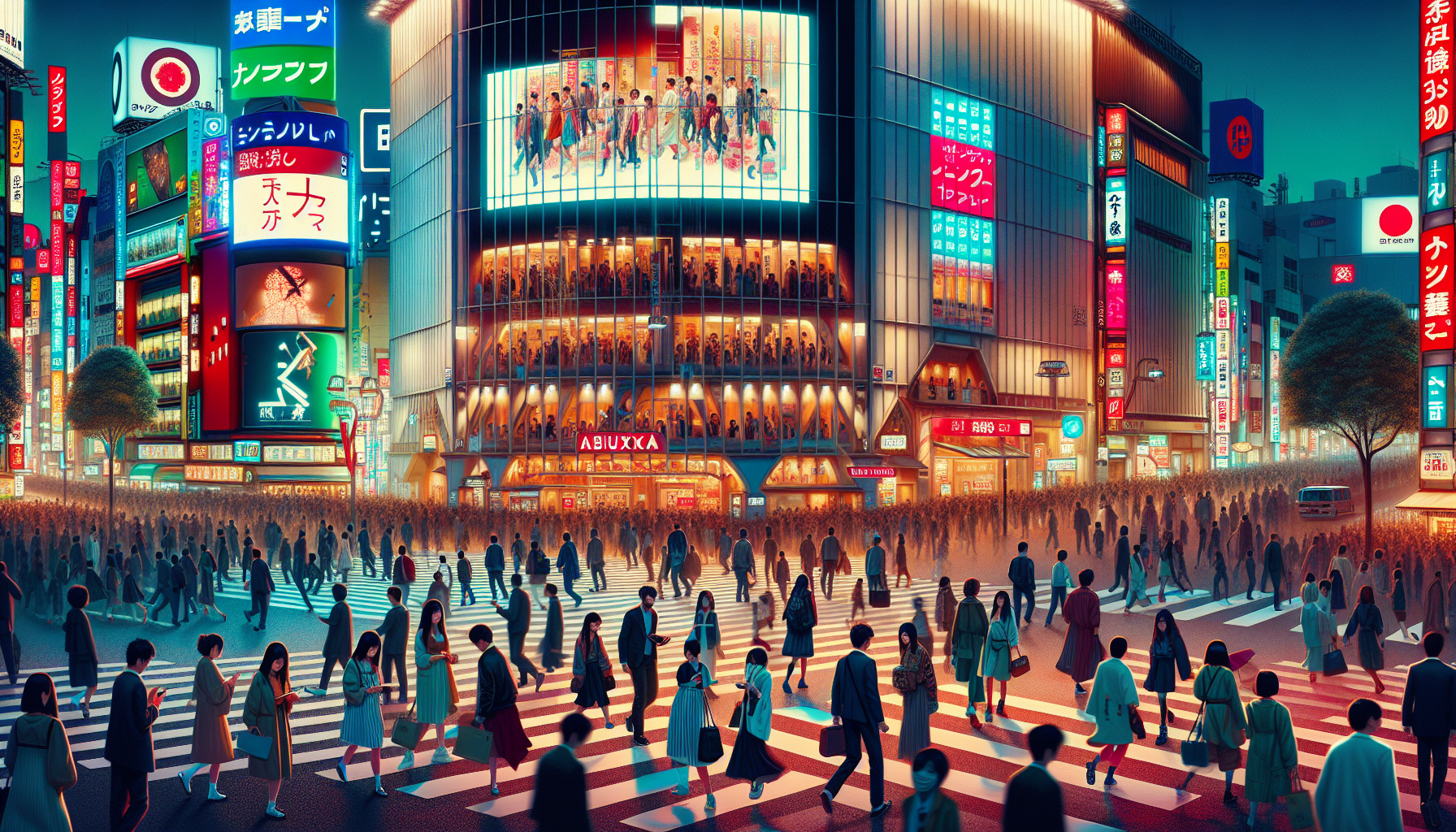
Spend the afternoon in Shibuya. The Shibuya Scramble Crossing is the world's busiest pedestrian intersection: up to 3,000 people cross simultaneously on the green light from all directions. Watch it from the second-floor window of the Starbucks on the northwest corner or from the Shibuya Sky observation deck on top of Scramble Square (book tickets in advance). The Hachiko statue at the station's west exit is a landmark — the Akita dog who waited for his deceased owner at Shibuya Station every day for nearly ten years.
Day 3: Asakusa, Senso-ji, and Tokyo Skytree
Asakusa is Tokyo's most traditional neighborhood, and the contrast with the previous two days is deliberate. Senso-ji Temple — Tokyo's oldest Buddhist temple, dating to 645 AD — is the anchor. Arrive before 8am if possible: the temple itself is open 24 hours, and the crowds that arrive with tour buses don't materialize until mid-morning. The two-story Kaminarimon Gate (Thunder Gate) with its enormous red lantern is the most photographed spot in Tokyo; at 7am you can photograph it properly.
Nakamise Shopping Street, the covered arcade leading to the temple, sells traditional snacks, folding fans, lucky charms, and souvenirs. Buy ningyo-yaki (small cakes shaped like temple characters) from a street vendor and eat them warm.
After Senso-ji, walk 15 minutes northeast to Tokyo Skytree — at 634 meters, the tallest structure in Japan and the second-tallest in the world. The view from the Tembo Deck at 350 meters puts the entire Kanto Plain in perspective; on a clear day you can see 70 kilometers to the horizon. Tickets can be bought online or on-site (on-site queues can be long on weekends).
The Yanaka neighborhood, a 20-minute train ride from Asakusa, is the best preserved Showa-era district in the city: narrow lanes, wooden houses, a classic shotengai (covered shopping street), and an old cemetery that doubles as a park. It's quiet, genuine, and almost completely tourist-free.
Day 4: Odaiba, teamLab, and Akihabara
Spend the morning in Odaiba, the artificial island in Tokyo Bay connected to the mainland by the spectacular Rainbow Bridge. The waterfront view looking back at the Tokyo skyline is one of the city's most striking — and largely overlooked by first-timers who get directed to the standard observation decks. The life-sized Unicorn Gundam statue near DiverCity mall changes pose and lights up at scheduled times; worth seeing if you're nearby.
If you booked tickets in advance, your teamLab Planets TOKYO slot will likely be in the morning or early afternoon. The immersive digital art experience — wading through a room of water that reflects infinite mirrored light, walking through fields of flowers that react to your presence — is genuinely unlike anything else in the city. Plan 90 minutes.
Afternoon: Akihabara, Tokyo's electric town. Multi-floor arcades, anime merchandise stores, electronics retailers stacked eight stories high, maid cafes, retro gaming shops. You don't need to be into anime to find it fascinating — the density and specificity of it is its own kind of spectacle. The Pokémon Center Mega Tokyo is in Ikebukuro (not Akihabara) if that's your priority.
Day 5: Shimokitazawa, Nakameguro, and Daikanyama
This is a deliberately unhurried day through some of Tokyo's best residential-bohemian neighborhoods. Shimokitazawa is a maze of narrow streets, vintage clothing stores, independent record shops, live music venues, and coffee shops that feel genuinely lived-in. It's where Tokyo's musicians, artists, and students congregate. The vintage shopping here is some of the best in the city.
Nakameguro is most famous for its canal-side walking path, lined with cherry trees that turn the waterway pink in late March and early April. Outside cherry blossom season it's a stylish neighborhood of boutiques, galleries, and excellent restaurants. The flagship Tsutaya Books in neighboring Daikanyama is arguably the most beautiful bookstore in the world — even if you don't read Japanese, spend an hour in there.
These three neighborhoods are within 10 minutes of each other by train. Combine them into a slow afternoon of exploring without an agenda. Have dinner at one of the hundreds of small restaurants along the Nakameguro canal.
Day 6: Day Trip — Hakone or Kamakura
Use one day to leave the city. Two options, depending on your priorities:
Option A: Hakone (for Mount Fuji views and onsen)
Hakone sits in an active volcanic caldera about 90 minutes from Shinjuku by Romance Car express train. The main draw is Mount Fuji — on clear days (most common in winter and early spring) the view of Fuji reflected in Lake Ashi from the Hakone Shrine's floating torii gate is iconic. The area also offers the Owakudani volcanic valley (active steam vents, sulfurous egg-shaped black eggs that supposedly extend your lifespan), a pirate-ship lake cruise, and the best concentration of traditional ryokan (Japanese inn) onsen outside of Kyoto. The Hakone Freepass covers most transport within the area.
Option B: Kamakura (for temples and the Great Buddha)
Kamakura is an hour south of Tokyo by train — the ancient capital of Japan (1185–1333 AD) and home to over 65 Buddhist temples and Shinto shrines, plus one of Japan's most recognizable images: the Great Buddha of Kamakura (Kotoku-in Temple), a 13.35-meter bronze statue cast in 1252 and sitting in the open air since a tidal wave destroyed its housing hall in 1498. The Hasedera Temple has a hilltop garden with views over the town to the sea. The Komachi-dori shopping street is excellent for craft goods and local sweets.
Day 7: Ueno, Ginza, and Final Exploration
Ueno Park is Tokyo's great public park and one of the best free half-days in the city. It contains the Tokyo National Museum (Japan's oldest museum, with galleries spanning prehistoric Japan through the samurai era, Buddhist art, and traditional crafts), the Tokyo Metropolitan Art Museum, the National Museum of Nature and Science, and the Ueno Zoo — all within a few minutes' walk of each other. Choose one or two and go deep rather than skimming all of them.
The Ameyoko Market runs beneath the JR Ueno tracks: a covered market corridor of discount clothing, fresh seafood, spices, and street food that has the energy of a bazaar and dates to the black market of the post-war occupation years. Walk it. Eat something.
Spend your final afternoon in Ginza — Tokyo's luxury retail district — then cross to Tsukiji Outer Market for a late lunch of the best seafood in the city. The inner wholesale market moved to Toyosu in 2018, but the outer market (open to the public) still has dozens of excellent sushi counters, tamagoyaki (rolled egg) specialists, and street vendors. Book a counter at one of the small sushi restaurants — you won't regret it as a final Tokyo meal.
Planning Your Tokyo Trip with AI
Tokyo's complexity is exactly the kind of problem where AI trip planning tools earn their keep. The city has over 23 wards, each with distinct character, and building a logical multi-day itinerary that minimizes unnecessary backtracking — while accounting for your interests, budget, and travel pace — takes real time if you're doing it manually.
Tools like japan-guide.com and Lonely Planet's Tokyo guide are excellent references, but they can't adapt to your specific situation. Travo can: tell it you're spending 7 days in Tokyo, your travel style (culture-focused, food-obsessed, anime fan, slow travel), and any constraints or must-sees, and it generates a geographically optimized, day-by-day plan in seconds. If your interests skew toward art and architecture rather than temples and electronics, or you're traveling with kids and need pacing adjustments, the itinerary adapts accordingly.
Download Travo free and generate your personalized Tokyo itinerary before you leave — it takes less time than researching just one neighborhood properly, and you'll arrive with a plan that actually fits how you travel.
Practical Tips for Tokyo in 2026
- Transportation: Google Maps is the best navigation tool for Tokyo — it handles train transfers, timing, and platform numbers reliably. Download an offline map as backup.
- Shoes: You will walk 15,000–20,000 steps per day. Wear comfortable shoes. You'll also remove them frequently at temples and some traditional restaurants — shoes that are easy to slip on and off are a practical advantage.
- Tax-free shopping: As of 2026, purchase tax-free at stores by showing your passport; keep receipts for airport customs. A refund process applies for larger purchases.
- Luggage forwarding (Takkyubin): Japan's luggage forwarding service lets you send bags between hotels or to the airport for ¥1,000–¥2,000 per bag. If you're moving accommodations mid-trip, this is a genuine quality-of-life upgrade.
- Booking windows: Ghibli Museum (1–3 months), TeamLab Planets (2–4 weeks), popular ramen counters and omakase sushi restaurants (1–2 months for the best spots). Plan ahead.
- Convenience stores: 7-Eleven, Lawson, and FamilyMart are better than the name suggests. Hot food, excellent onigiri, alcohol, ATMs, and free WiFi. They solve most logistical problems.
- Neighborhoods to sleep in: Shinjuku and Shibuya are the most convenient. Asakusa is cheaper and more atmospheric. Ginza is expensive but central. All are well-connected by train.
Seven days in Tokyo is both enough and not nearly enough. But with a well-built itinerary, you'll leave having actually experienced the city — not just moved through it. Use Travo to build your personalized version of this plan, and show up ready to be surprised by a city that consistently delivers on every expectation and then some.