
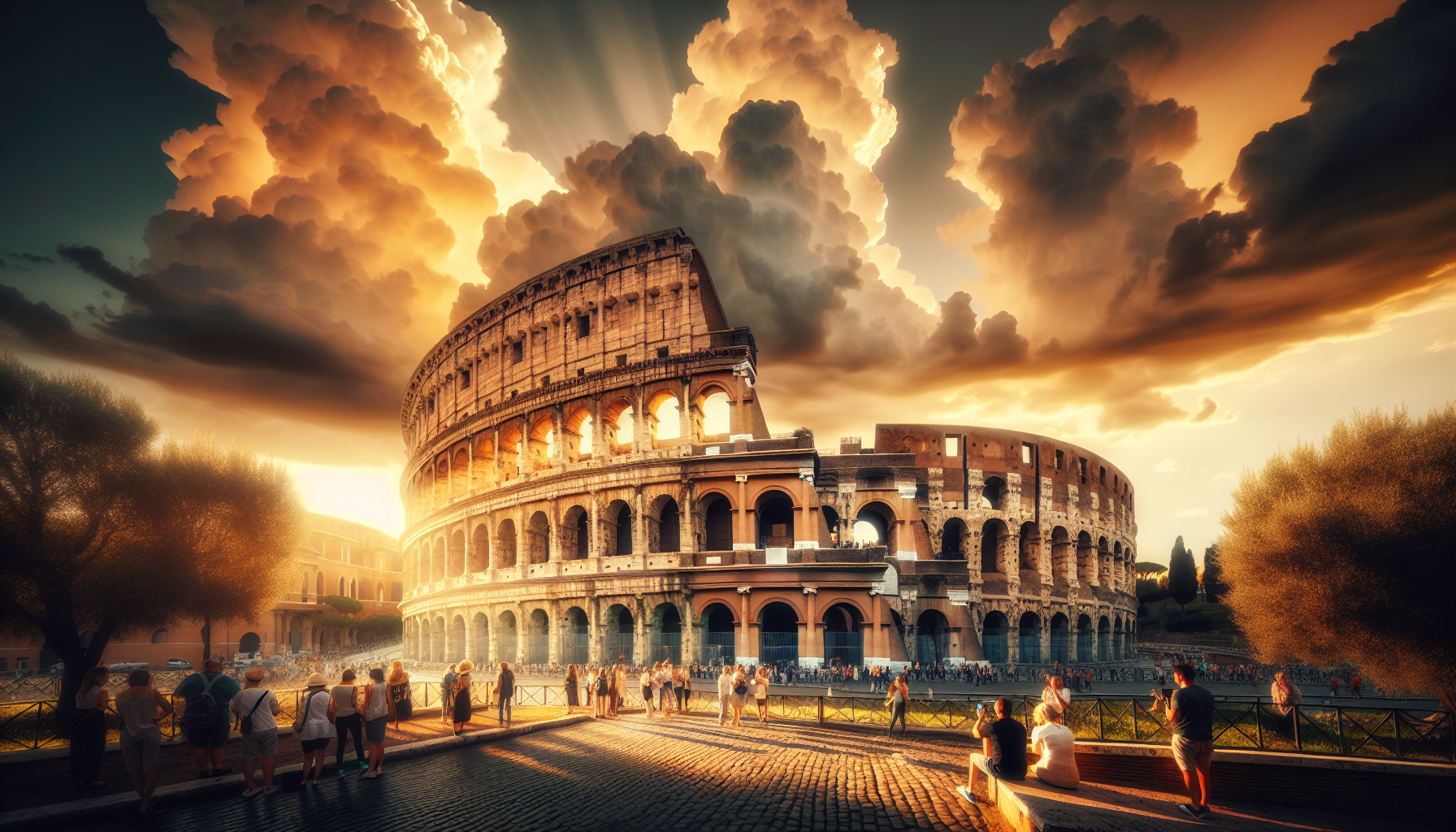
Three days in Rome sounds like barely enough time — and it isn't, not really. But if you plan it well, three days gets you through the greatest hits with enough breathing room to eat well, walk aimlessly, and actually feel the city rather than just sprint through it. The Eternal City has been drawing visitors for over two millennia; it can handle your long weekend.
This guide gives you a tested, geographically logical 3-day Rome itinerary — the kind that groups nearby sights together, builds in realistic timing, and leaves room for the things you'll discover by wandering. If you want to skip the planning entirely and get a personalized Rome itinerary built for your specific travel dates and style, Travo can generate one in under a minute. But let's walk through the full plan first.
Before You Arrive: The One Thing That Changes Everything
Book your Colosseum and Vatican Museums tickets before you leave home. This is non-negotiable. Both attractions sell out weeks in advance during peak season (March–October), and walking up on the day typically means either paying a premium to a tour reseller or standing in queue for two-plus hours. Pre-booked timed-entry tickets cost the same as at the door and save you an entire morning of waiting.
The Colosseum combo ticket (€18 in 2026) includes the Roman Forum and Palatine Hill. Vatican Museums tickets (€20) include the Sistine Chapel. Book both the moment your travel dates are set.
Day 1: Ancient Rome — Colosseum, Forum, and Trastevere
Morning: The Ancient Core
Start at the Colosseum as early as possible — doors open at 9am, and arriving at 9:15 means you'll experience the arena before the bus tours arrive. Built in 70 AD and completed in just a decade, the Colosseum could seat 50,000 spectators and hosted gladiatorial combat for over 400 years. Even if you've seen a hundred photos, walking inside is a different thing entirely.
Your combo ticket gets you directly into the Roman Forum after the Colosseum — walk five minutes east and you're standing in what was once the center of the ancient world. The Forum is where Rome was governed, debated, and traded for centuries. Don't rush it. The Temple of Saturn, the Arch of Septimius Severus, and the Via Sacra (Sacred Way) are all here. Give yourself 90 minutes to wander properly.
Finish with Palatine Hill, the elevated park that overlooks both the Forum and the Circus Maximus. The panoramic view of the Forum from above is one of the best in Rome — and most tourists skip it. You'll practically have it to yourself.
Afternoon: Monti and Capitoline Hill
Lunch in Monti, Rome's coolest neighborhood and the most local area near the ancient sites. Avoid anything with photos on the menu — find a spot with a handwritten board and order whatever they're proud of. Cacio e pepe, carbonara, or supplì (fried rice balls) if you want a quick snack.
After lunch, walk to Capitoline Hill — Michelangelo's redesigned piazza sits at the top, and the view down over the Forum is spectacular. The Capitoline Museums are optional but worth it if you have two hours; they house the original Marcus Aurelius equestrian statue and rooms of ancient Roman sculpture that most visitors miss entirely.
Evening: Trastevere
Cross the Tiber River to Trastevere for dinner. This medieval neighborhood is Rome's most charming at night — narrow cobblestoned streets, ivy-covered buildings, and trattorias that have been run by the same families for decades. Eat slowly. Order a carafe of house wine. Watch the neighborhood come alive as the evening settles in. This is what travel is supposed to feel like.
Day 2: Vatican City — Museums, Sistine Chapel, St. Peter's
Morning: Vatican Museums and Sistine Chapel
Dedicate your entire morning to Vatican City. Go early — the 9am entry slot is less crowded than anything after 10:30. The Vatican Museums are vast; you could spend a full day and not see everything. The highlights: the Gallery of Maps, the Raphael Rooms (Raphael's frescoes are just as impressive as the Sistine Chapel, and far less appreciated), and then the Sistine Chapel itself.
The Sistine Chapel will be more crowded than you expect, and photography is prohibited. Stand near the center and look up at Michelangelo's ceiling — painted while lying on scaffolding between 1508 and 1512 — and understand why it changed art forever. The Last Judgment fresco on the altar wall, added 25 years later, is equally extraordinary.
Allow 2.5–3 hours for the museums total. Move with purpose through the earlier galleries and slow down when you reach the Raphael Rooms.
Late Morning: St. Peter's Basilica
St. Peter's Basilica is free to enter (bring ID; there's a security check). Entry is free but dress code is enforced: no bare shoulders or knees. The basilica is vast — the largest church in the world by interior volume — and contains Michelangelo's Pietà (1499), one of the most extraordinary sculptures ever carved, behind bulletproof glass to your right as you enter.
If your legs have anything left, climb the dome. The 551-step climb (partly by stairs, partly by a tight spiral inside the dome's double shell) rewards you with the single best panoramic view of Rome available to visitors. Not a metaphor — it's genuinely spectacular.
Afternoon: Castel Sant'Angelo
Walk 15 minutes along the Tiber to Castel Sant'Angelo, originally built as Emperor Hadrian's mausoleum in 139 AD and converted over the centuries into a fortress, prison, and papal escape route. There's a secret passageway (the Passetto di Borgo) connecting it directly to the Vatican — popes used it in emergencies for centuries. The rooftop terrace has a sweeping view of the river and the city, and the interior levels tell 1,900 years of Roman history in a remarkably accessible way.
Evening: Prati Neighborhood
The Prati neighborhood, directly north of the Vatican, is where locals who work in Vatican City actually eat and shop. It's quieter than the tourist center, the restaurants are good and reasonably priced, and it's a chance to experience a more residential, everyday side of Rome.
Day 3: Baroque Rome — Fountains, Piazzas, and the Pantheon
Early Morning: Trevi Fountain
The Trevi Fountain (1762) is one of the most photographed spots on earth — and between 9am and 8pm it's mobbed. Go before 8am. The streets around it will be nearly empty, the light will be extraordinary, and you'll actually be able to stand at the edge and look at it properly rather than through a sea of selfie sticks. Throw your coin (over your left shoulder with your right hand — legend says it guarantees you'll return to Rome), and go get breakfast in the neighborhood before the tourists arrive.
Morning: Spanish Steps and Pantheon
Walk 10 minutes northwest to the Spanish Steps (Piazza di Spagna) — 135 steps built in 1725, lined with azalea blooms in spring. The area around the steps is Rome's luxury shopping district (Via Condotti runs directly from the base), though the steps themselves are free and the view from the top toward the city is worth the climb.
From there, walk 15 minutes south to the Pantheon — the best-preserved building from ancient Rome, built between 118 and 125 AD under Emperor Hadrian. Entry requires a timed ticket (€5, bookable online). What you're walking into is a 1,900-year-old building with a 43-meter unreinforced concrete dome that remained the world's largest for over 1,300 years. The oculus — the 9-meter circular opening at the dome's apex — is the only light source. When it rains, the water falls straight through onto the slightly convex floor and drains away. It still works perfectly. Go in, look up, and recalibrate your sense of what humans are capable of building.
Afternoon: Piazza Navona and Campo de' Fiori
Lunch near the Pantheon, then walk five minutes to Piazza Navona — Rome's most theatrical baroque piazza, built on the footprint of an ancient Roman stadium. Bernini's Fountain of the Four Rivers (1651) dominates the center; the four figures represent the Nile, Ganges, Danube, and Río de la Plata. Street artists, outdoor cafes, and crowds of both tourists and locals fill the piazza from mid-morning to midnight.
A ten-minute walk south brings you to Campo de' Fiori, a market square that transforms from a morning fruit-and-vegetable market (worth seeing if you're up early enough) into an evening bar scene. The slightly chaotic energy here is distinctly Roman — less polished than Piazza Navona, more alive.
Optional: Borghese Gallery
If you booked tickets in advance (you must — entry is strictly timed and capped at 360 visitors per slot), the Borghese Gallery in Villa Borghese is one of Rome's finest museums and one of the world's great sculpture collections. Bernini's Apollo and Daphne (1625) alone justifies the trip. Your slot is two hours; it will feel like twenty minutes.
Evening: Final Dinner
Your last Roman dinner deserves some ceremony. Return to Trastevere, or explore the Jewish Ghetto — one of Rome's oldest neighborhoods, known for artichokes fried Jewish-style (carciofi alla giudia), salt cod, and pastries that have been made in the same shops for generations. Book a table if you can. End with a passeggiata — a slow evening walk with no destination, the way Romans have been spending their evenings for centuries.
Planning Your Rome Trip with AI
The itinerary above works well as a framework — but everyone's version of Rome is different. If you'd rather see more art and fewer ruins, or you're traveling with kids and need pacing adjustments, or you've already seen the Vatican and want to go deeper into Renaissance Rome instead, a generic three-day plan won't serve you.
Tools like Romewise and Happy To Wander offer useful Rome-specific content — but they can't personalize to your specific travel dates, preferences, and pace. Travo can: tell it you're spending 3 days in Rome, your travel style (culture, food, adventure, slow travel), and any constraints (budget level, mobility considerations, must-sees), and it builds a geographically clustered, day-by-day itinerary tailored to you — in seconds rather than an evening of research.
The result gives you the same thoughtful structure as a hand-built plan, without the hours of cross-referencing maps, opening hours, and ticket availability. You can then edit it, extend it, or use it as a jumping-off point for deeper exploration. Download Travo free and generate your personalized Rome itinerary before your trip — it takes less time than booking your flights.
Practical Tips for Rome in 2026
- Book early: Colosseum and Vatican Museums tickets 3–6 weeks ahead in peak season; Borghese Gallery 4–8 weeks ahead
- Walk: Rome's historic center is extremely walkable. Most of the Day 3 itinerary is under 2km total walking
- Dress for churches: Shoulders and knees must be covered for Vatican Museums, St. Peter's, and most churches. A light scarf solves this instantly
- Drink the water: Rome's public drinking fountains (nasoni — "big noses") provide free, cold, drinkable water throughout the city. Bring a refillable bottle
- Best months: April, May, September, October. July–August is hot, crowded, and expensive. December–February is cold but quiet with much shorter queues
- Transport: A 48-hour or 72-hour public transit pass covers metro, bus, and tram. Taxis are metered and reliable from official stands — avoid unmarked cabs near tourist sites
Three days won't be enough. It never is. But if you plan it well, you'll leave Rome knowing you saw it properly — and already planning when to come back. Use Travo to build your personalized version of this itinerary, and show up ready to wander.
Related Reading
- Italy Itinerary 10 Days: Rome, Florence and Venice by Train
- Greece Island Hopping Itinerary: The Best Routes for 7–14 Days (2026 Guide)
- How to Plan a City Break: The Complete Guide to Short Urban Trips
- Slow Travel Italy Itinerary: How to See More by Staying Longer (2026 Guide)
- Dubrovnik Itinerary 3 Days: Old Town, City Walls, and Island Escapes
Plan this route with the city guide
Use the broad guide to things to do in Rome when choosing attractions; keep this page as the realistic three-day route.