
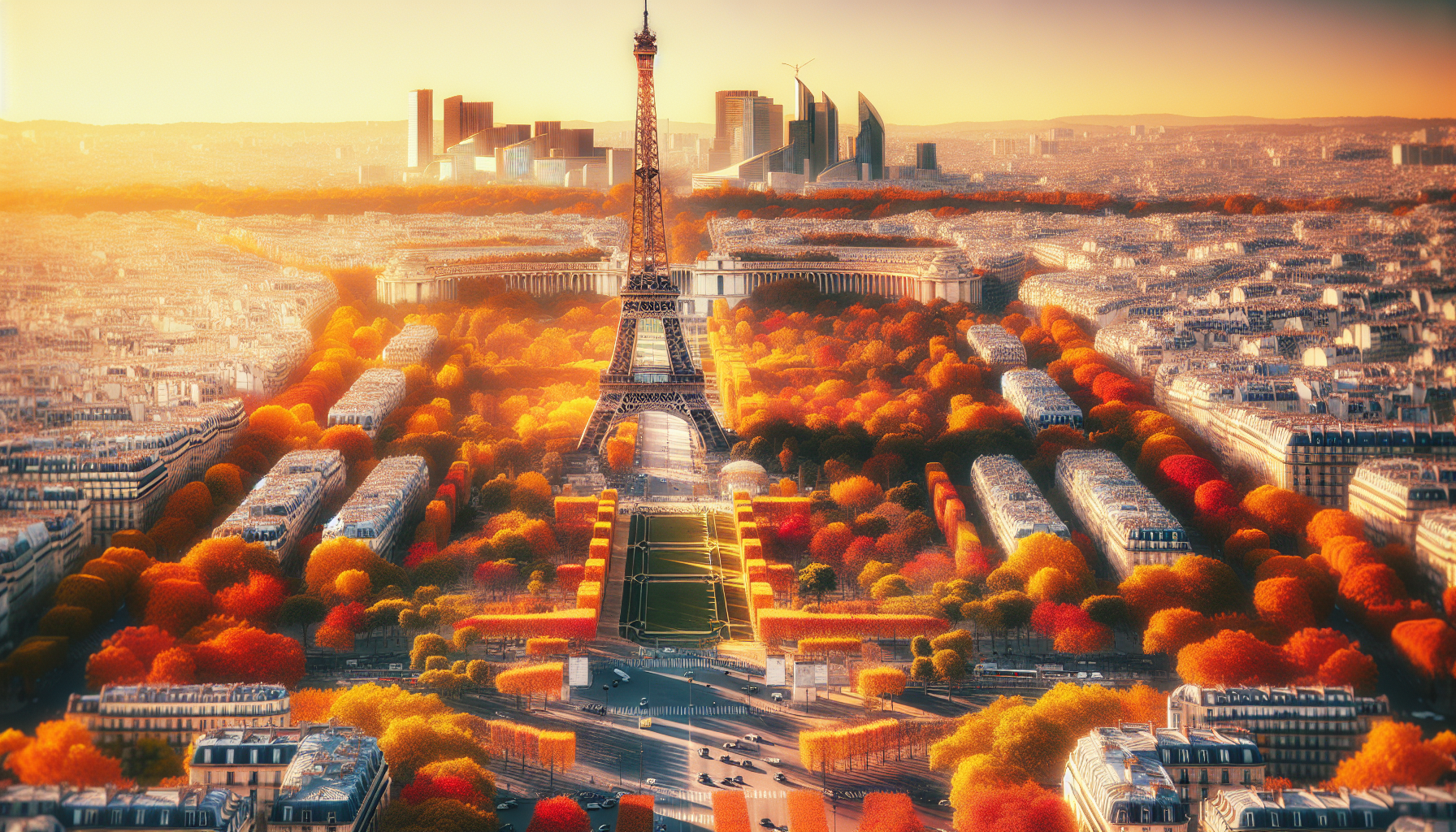
Five days in Paris is the sweet spot. Two days and you're skimming the surface. A week and you're in danger of running out of plan before you run out of energy. Five days lets you cover the big three (Eiffel Tower, Louvre, Versailles), actually explore a couple of neighborhoods properly, eat well without rushing, and still have an afternoon where you just wander with no agenda. That's Paris at its best.
This itinerary is built to be geographically efficient — grouping nearby sights to minimize backtracking — while leaving enough flex for the accidental discoveries that make Paris trips memorable. If you'd rather skip the planning and get a Paris itinerary built around your specific travel style, interests, and dates in under a minute, Travo can generate one for you. But let's walk through the full five-day plan first.
Before You Arrive: Two Bookings That Change Everything
Book two things the moment your Paris dates are confirmed:
- Eiffel Tower summit access — tickets open 60 days in advance and sell out reliably during peak season (March–October). The summit view (276 meters) is a different experience from the second floor. Don't wait.
- Palace of Versailles timed entry — Versailles is genuinely mobbed without pre-booked access. Passport to Versailles tickets (€20, includes gardens) are bookable up to 3 months ahead and let you enter via a dedicated fast-track lane.
Everything else in this itinerary can be handled on arrival or booked a few days ahead. These two cannot.
Day 1: Iconic Paris — Eiffel Tower, Trocadéro, and the Seine
Morning: Eiffel Tower and Champ de Mars
Start your Paris trip with the thing that defines the city. Arrive at the Eiffel Tower early — your pre-booked summit tickets will specify a timed entry slot; aim for the first available in the morning. The summit view at 9am, before the day-trip crowds arrive, is something else entirely. On a clear day you can see 70km in every direction.
After descending, walk south into the Champ de Mars — the long park stretching away from the tower's base. This is a good spot to sit down, get your bearings, and actually look at the Eiffel Tower from a distance. Most visitors spend all their time directly beneath it and miss the perspective.
Afternoon: Trocadéro and Arc de Triomphe
Cross the Seine to the Trocadéro esplanade — the official best viewpoint for Eiffel Tower photos, framed by the Palais de Chaillot. The view from here (and from the steps below) is the postcard shot of Paris. Late afternoon light is best; early morning crowds are nonexistent.
Walk or metro 15 minutes east to the Arc de Triomphe. The climb to the top (284 steps, free for under-26 EU citizens, €13 for everyone else) gives you a panoramic view looking straight down the Champs-Élysées toward the Louvre — and you can see the Eiffel Tower in the opposite direction simultaneously. It's one of the rare spots in Paris where you can hold the whole city in one glance.
Evening: Champs-Élysées and Dinner
Walk the Champs-Élysées from the Arc de Triomphe toward Place de la Concorde. Yes, it's touristy; yes, it's also genuinely grand and beautiful at dusk when the lights are coming on. Dinner in the 8th arrondissement tends to be expensive — consider walking 10 minutes into the 17th for better price-to-quality, or take the metro to the Saint-Germain-des-Prés area for livelier dining options at more reasonable prices.
End the evening at the Eiffel Tower at night — from the Trocadéro or from the banks of the Seine. Every hour on the hour after dark, the tower lights up for a 5-minute sparkle display. It's spectacular and completely free.
Day 2: Art and History — The Louvre and Île de la Cité
Morning: Louvre Museum
The Louvre holds 380,000 objects in 60,000 square meters — you cannot see it all. Don't try. Instead, book a timed-entry slot (€22 in 2026) for 9am opening, and decide in advance on your must-sees. The three non-negotiables: the Mona Lisa (Denon Wing, Room 711 — busiest room in the museum by 10am, so go immediately), the Venus de Milo (Sully Wing, Room 346), and the Winged Victory of Samothrace (top of the Daru Staircase — genuinely one of the most breathtaking objects in Western art).
Give yourself 2.5–3 hours and move with intention. The Dutch Masters gallery, the Egyptian Antiquities (including a scale model of Memphis), and the Islamic Art wing — housed in a stunning glass-and-steel courtyard — are all worth a detour if time allows.
Afternoon: Jardin des Tuileries and Île de la Cité
Exit the Louvre into the Jardin des Tuileries — the formal gardens between the museum and Place de la Concorde. Get lunch at one of the garden cafés (overpriced but convenient), or walk five minutes north toward Rue de Rivoli for better options at lower prices.
In the afternoon, head to Île de la Cité, the original island settlement at the heart of Paris. Notre-Dame Cathedral, partially reopened after the 2019 fire and ongoing restoration work, remains one of Europe's great Gothic buildings — the exterior, the rose windows, and the adjacent garden are all worth seeing even with scaffolding present. Immediately behind Notre-Dame, visit Sainte-Chapelle (€13): a 13th-century Gothic chapel whose 15 stained-glass windows — depicting 1,113 scenes from the Bible — cover almost the entire wall surface of the upper chapel. On a sunny afternoon, the effect is extraordinary.
Evening: Left Bank and Musée d'Orsay
Cross to the Left Bank for dinner in Saint-Germain-des-Prés. The neighborhood has been home to writers, philosophers, and artists since the 1940s — Sartre and de Beauvoir held court at Café de Flore; Hemingway drank at the Deux Magots. Both cafés still exist and both are worth a coffee (expensive, but the history is real). Dinner at the market street Rue de Buci has options at every price point.
Day 3: Montmartre and the Artists' Quarter
Morning: Sacré-Cœur and Montmartre Village
Montmartre sits on Paris's highest hill — 130 meters — and the climb (or funicular ride) up to Sacré-Cœur Basilica rewards you with the most panoramic view of Paris available for free. The basilica, completed in 1914 in Romanesque-Byzantine style, is striking from outside and serene inside. Go early morning to experience it before the souvenir sellers set up around the steps.
Wander the cobblestone streets of Montmartre village after Sacré-Cœur. This is the Paris of Renoir, Toulouse-Lautrec, and Picasso — who lived here in his early years. Place du Tertre is packed with portrait artists (pricy and touristy, but atmospheric). The Moulin Rouge, the famous cabaret at the base of the hill, is worth seeing from outside even if you're not attending a show (tickets start at €115 for the dinner show).
Afternoon: Musée d'Orsay
Take the metro from Montmartre south to the Musée d'Orsay (€16). Housed in a magnificent Beaux-Arts railway station built in 1900, the Orsay holds the world's greatest collection of Impressionist and Post-Impressionist art: Monet's Water Lilies studies, Van Gogh's Bedroom in Arles, Renoir's Dance at the Moulin de la Galette, Degas's bronze sculptures, and Seurat's Circus. Unlike the Louvre, the Orsay is a manageable size — two hours is enough to see everything without feeling rushed.
The museum's café on the upper level, inside the original station clock, has one of Paris's best views across the Seine toward the Tuileries. Get a coffee there.
Evening: Le Marais
Spend your evening in Le Marais, Paris's most vibrant neighborhood. It's the center of Paris's LGBTQ+ scene, its Jewish cultural quarter (Rue des Rosiers), and its most interesting independent retail. Place des Vosges — built in 1612 and Paris's oldest planned square — is beautiful at dusk, surrounded by identical red-brick arcaded buildings. Victor Hugo lived here for 16 years; his apartment is now a free museum on the square's north side.
Dinner in Le Marais: L'As du Fallafel on Rue des Rosiers is famous and deserves the reputation. For a sit-down meal, the side streets off Place des Vosges have excellent options at reasonable prices.
Day 4: Versailles Day Trip
Full Day: Palace of Versailles
Dedicate your entire Day 4 to Versailles. Take the RER C train from central Paris (40 minutes, €4 each way) to Versailles-Château Rive Gauche station. Arrive early — before 9:30am — using your pre-booked timed entry to skip the queue entirely.
The must-sees inside the palace:
- The Hall of Mirrors — 73 meters long, 357 mirrors, built to reflect the glory of the setting sun. Where the Treaty of Versailles was signed in 1919.
- The King's Grand Apartments — seven rooms dedicated to planets and gods, each more gilded than the last.
- The Royal Chapel — arguably the most beautiful room in the palace, often overlooked by visitors focused on the Hall of Mirrors.
Allow two hours for the palace interior, then spend the afternoon in the gardens. The main gardens (formal French baroque landscape by André Le Nôtre, covering 800 hectares) are included in the Passport ticket. The Grand Canal — a 1.6km-long artificial waterway — is a 30-minute walk from the palace; rowing boats are available for rent.
If time allows: walk 15 minutes northwest to the Petit Trianon and Marie Antoinette's Hamlet — a miniature working farm the queen had built as a retreat from court life. It's charming, bizarre, and surprisingly moving.
Evening: Return to Paris
Return to Paris by 6–7pm and eat somewhere low-key near your hotel. After Versailles, you'll want something uncomplicated and not too expensive — a crêperie or a neighborhood bistro over anything elaborate.
Day 5: Le Marais Deep Dive, Latin Quarter, and Farewell Paris
Morning: Marché des Enfants Rouges and Centre Pompidou
Start Day 5 at the Marché des Enfants Rouges (Rue de Bretagne, Le Marais) — Paris's oldest covered market, dating to 1615. It opens at 8:30am and serves breakfast and brunch from stalls representing French, Moroccan, Lebanese, Japanese, and Italian food. Incredibly local, reasonably priced, and a proper Parisian morning.
Walk ten minutes to the Centre Pompidou (€15) — the inside-out building that put Le Marais on the cultural map when it opened in 1977. The permanent collection of modern and contemporary art is substantial (Matisse, Kandinsky, Duchamp, Warhol), and the rooftop view over Paris is free with any museum ticket. The exterior escalator ride up alone is worth experiencing once.
Afternoon: Latin Quarter and Panthéon
Cross the Seine to the Latin Quarter — Paris's student and intellectual heart, home to the Sorbonne since 1257. Walk Rue Mouffetard, one of Paris's oldest market streets, now lined with food shops, cafés, and restaurants. Pick up provisions for a picnic.
Walk 10 minutes south to the Panthéon (€13): a neoclassical mausoleum housing the remains of France's greatest citizens — Victor Hugo, Marie Curie, Émile Zola, Jean-Jacques Rousseau. Curie is notable as the only woman interred here on her own merits (not as someone's wife). The building's interior, topped with a dome modeled on the Pantheon in Rome, is enormous and austere. Foucault's Pendulum — the device that first demonstrated Earth's rotation in 1851 — still swings in the center of the nave.
Spend your last afternoon in the Jardin du Luxembourg, directly west of the Panthéon. Paris's most beautiful park, centered on the Luxembourg Palace (now the French Senate). Rent a toy sailboat at the octagonal pond, find a green metal chair, and simply sit. This is the slowest, most Parisian thing you can do — and it's completely free.
Evening: Farewell Dinner
For your last Paris dinner, return to wherever you ate best during the trip. Or: book somewhere in advance in the Latin Quarter or Île Saint-Louis (the smaller island behind Notre-Dame, almost entirely residential, with outstanding ice cream at Berthillon). Finish with a final Seine walk at night, watching the bridges lit up and the Bateaux Mouches cruise boats sliding past.
Planning Your Paris Trip with AI
The itinerary above is a solid foundation — but Paris rewards personalization. If you're a solo traveler who cares more about galleries than famous landmarks, or a couple on a first trip who wants maximum romance with minimum walking, or a food-focused visitor who'd swap a museum for a morning food tour every time — a generic five-day plan isn't quite right for any of you.
Tools like Viator and GetYourGuide are useful for booking individual tours, but they don't build the full picture. Travo does: tell it you're spending five days in Paris, your travel style, your interests, and any constraints (budget, mobility, must-see requirements), and it generates a geographically clustered, day-by-day Paris itinerary tailored to you in seconds.
The result is the same thoughtful structure as a hand-crafted plan, without the hours of research, cross-referencing opening hours, and puzzling over which neighborhoods are actually near each other on a map. Download Travo free, generate your personalized Paris itinerary, and arrive knowing exactly what each day looks like — so you can spend your mental energy on actually being there.
Practical Tips for Paris in 2026
- Metro: Paris's 16-line metro covers the entire city. Buy a carnet of 10 tickets (€17.35) or a Navigo Easy card loaded with pay-per-ride credits. The 24/48/72-hour unlimited passes are worth it if you're taking more than 5–6 rides per day.
- Best months: April–June and September–October are ideal — pleasant weather, long daylight, manageable crowds. July–August is hot and very crowded. November–February is cold but quiet, with dramatically shorter queues at every major attraction.
- Pickpockets: More prevalent in Paris than most European capitals. Wear a cross-body bag in front, keep phones in front pockets, and stay aware around metro entrances and at major tourist sites.
- Language: Start every interaction with "Bonjour." French people genuinely appreciate the effort of basic politeness — a "Bonjour, parlez-vous anglais?" (Do you speak English?) will get you much further than immediately launching into English.
- Dining times: Lunch is 12:00–2:00pm; dinner is 7:30–10:00pm. Kitchens often close between services. Arrive within these windows or you'll find yourselves eating in tourist traps that never close.
- Free things: Most Paris museums are free on the first Sunday of the month (Louvre, Orsay, Pompidou, Versailles). Crowds are significantly larger on these days — weigh the savings against the experience.
Five days in Paris is enough to understand why people come back every year. Plan it well — or let Travo plan it for you — and the city will do the rest.
Related Reading
- Greece Island Hopping Itinerary: The Best Routes for 7–14 Days (2026 Guide)
- New York City 4 Day Itinerary: The Perfect Plan for First-Timers
- Amsterdam 3 Day Itinerary: Canals, Culture, and Hidden Gems (2026 Guide)
Plan this route with the city guide
Use the broad guide to things to do in Paris when choosing attractions; keep this page as the day-by-day five-day route.